
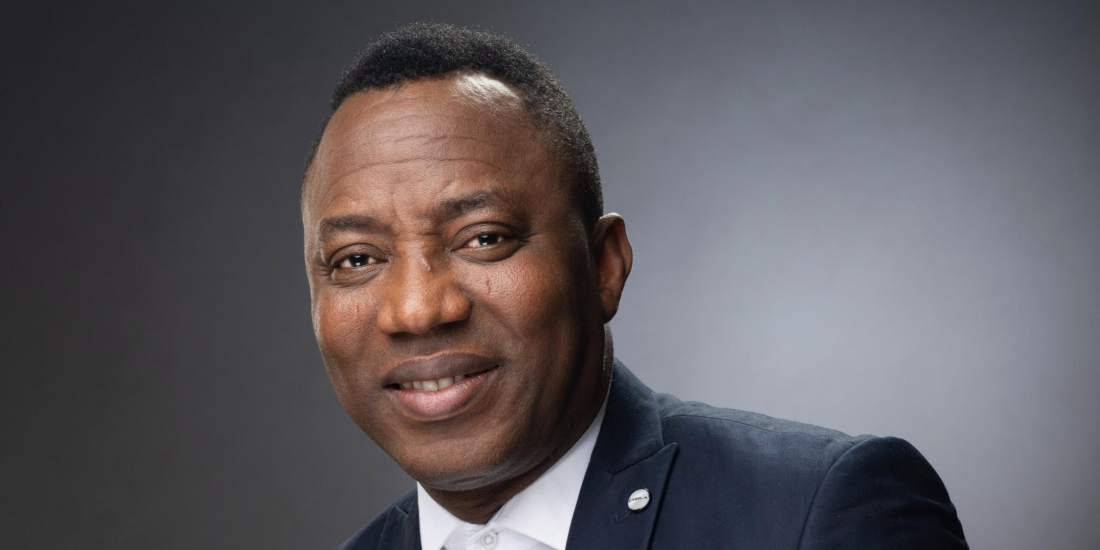

The presidential candidate of the African Action Congress (AAC) in the 2027 election, Omoyele Sowore, has promised to restore the fuel subsidy if elected president of Nigeria.
Sowore made the pledge during an interview on ARISE TV on Tuesday, while presenting his proposed alternative to the economic policies of the current administration.
Asked directly whether his administration would reinstate the fuel subsidy, Sowore replied, “Absolutely.”
The AAC candidate argued that the federal government had not completely eliminated subsidies but had instead changed the areas and manner in which they were applied.
“In the first place, they are still paying subsidy. They just changed the name of whatever they call it. They are subsidising not only petrol—because they don’t have enough and can’t produce locally—they are also subsidising the Naira,” he said.
Sowore further alleged that the government was quietly supporting the naira exchange rate through what he described as “quiet and secret” subsidies.
“The reason the Naira is at a certain, you know, rate to a dollar, is because it’s being quietly and secretly subsidized,” he said.
He acknowledged that governments around the world sometimes intervene to support their currencies but questioned why the Nigerian government continued to portray subsidy as inherently undesirable.
“Yes, but why are you lying about subsidy then?” Sowore asked, arguing that subsidies could be justified when they were targeted at protecting vulnerable citizens.
He also challenged the argument that subsidy primarily benefited the poor, saying wealthy Nigerians had historically received greater benefits through government concessions.
According to him, customs waivers granted to importers represented a form of subsidy that disproportionately benefited wealthy individuals and businesses.
“In fact, the people that get the most subsidy in Nigeria is not the poor, it’s the rich,” he said, adding that the benefits received by importers through customs waivers should be compared with the small amount of subsidy previously attached to petrol.
Sowore also linked the removal of petrol subsidy to the subsequent depreciation of the naira and worsening economic conditions.
“And you saw what happened immediately you remove subsidy. Look at where your economy tanked. Your Naira also went down the toilet,” he said.
He said an AAC-led government would seek to change what he described as the “old mentality” responsible for persistent poverty and economic hardship in Nigeria.
“What we have to do differently first and foremost is to get rid of this old mentality and the ideas that brought poverty to become a standard, you know, household name in Nigeria,” he said.
Sowore also criticised the description of Nigeria’s hardship in terms of “multidimensional poverty”, arguing that the country’s food insecurity situation reflected the severity of the economic crisis.
He cited the Food and Agriculture Organization (FAO), saying Nigeria was among countries identified as facing food shortages in 2026.
According to Sowore, Nigeria’s inclusion was particularly troubling because it is an oil-producing country.
“That’s the country we are in,” he said, accusing the government of placing too much emphasis on how the economy was presented rather than addressing the conditions confronting citizens.
President Bola Tinubu announced the removal of petrol subsidy during his inauguration on May 29, 2023, declaring that “subsidy is gone.”
The President had justified the decision on the grounds that the subsidy had become increasingly expensive and that funds previously spent on it would be redirected towards infrastructure, education, healthcare and job creation.
The policy took effect almost immediately, triggering a sharp increase in petrol prices and contributing to rising transportation costs and broader living expenses for Nigerians.
Sowore’s pledge to restore the subsidy therefore represents a significant departure from the current administration’s approach and is likely to feature prominently in the economic debate ahead of the 2027 presidential election.