

By Kunle Kalejaye
The countdown to the 2027 general elections is officially on, and while most Nigerians focus on the upcoming campaigns, a critical battle is already being fought where it matters most: in our law courts. And inside the solemn walls of INEC headquarters, the laws as pronounced by the courts are effectuated.
Operating under the 1999 Constitution and the fresh provisions of the Electoral Act 2026, the Independent National Electoral Commission (INEC) has locked in the big dates.
The Presidential and National Assembly elections are set for January 16, 2027, followed by the Governorship and State Assembly elections on February 6, 2027. While these look like simple calendar dates, they represent a high-stakes test of our statutory frameworks. For the average citizen, these timelines represent the fragile boundary between electoral order and chaos, serving as the benchmark for a transition process that must align perfectly with constitutional limitations.
Beyond the written law, our courts have stepped in to make sure political parties play strictly by the rules. Two major cases from 2026 have rewritten how parties must behave. The first is a landmark Supreme Court ruling in INEC v. Zenith Labour Party (ZLP) (2026). The second is a Federal High Court judgment in SDP v. INEC (2026). Together, these two decisions clearly define what the electoral commission can do and what rights political parties have. These are not just minor legal adjustments; they represent a massive shakeup in how Nigerian democracy operates behind closed doors.
For months, political parties and civil society groups tried to challenge INEC’s right to dictate this election timetable, arguing that the commission has cut corners on candidate management timelines. This dispute came to a head in the case of Youth Party v. INEC, where the argument was proferred that administrative adjustments cannot truncate statutory windows. However, on July 16, 2026, the Court of Appeal in Abuja gave INEC the ultimate green light. The appellate court ruled that the commission’s timetable stands as valid subsidiary legislation with the full force of law, meaning politicians must play by the commission’s schedule, no matter how tight the deadlines feel. This decision effectively insulated the commission from frivolous injunctions that threatened to derail the strict progression of the electoral cycle.
This regulatory grip was tightened further by a landmark Supreme Court ruling on September 24, 2026, in INEC v. Zenith Labour Party. The apex court enforced Section 77(5), (6), and (7) of the Electoral Act 2026, which mandates that all political parties submit their comprehensive membership registers to INEC at least 21 days before any primary elections. Under this strict rule, if your name is not on that official register, you cannot vote or run for office. If a party misses the deadline, the law completely bars them from presenting any candidate for that position. Sadly, what was hitherto considered a minor paperwork error has already cost high-profile politicians their spots on the ballot, because their parties submitted their lists late.
Fortunately for the parties, the courts also checked INEC’s power. On May 26, 2026, Justice James Omotosho ruled in favor of the Social Democratic Party, stating that INEC cannot arbitrarily shorten the timelines given to parties by law. This forced INEC to reset its timetable to respect the legal guarantees that give parties up to 120 days before the election to submit candidate names, and up to 90 days to swap candidates if someone steps down. Together, these legal precedents mean that while political parties face a zero-tolerance policy for sloppy paperwork, INEC is also locked into strict timelines. The rules of the game are fixed, long before the first vote is even cast.
Backed by Section 287(1) of the Constitution, which makes Supreme Court decisions binding nationwide, INEC has used this legal shield to stamp out internal party lawlessness and unconscionable political nomadism. Any political party that fails to submit its register on time will face outright candidate disqualification. By doing so, the apex court brought sanity to intra-party democracy, closing the door on the chaotic substitutions that marred previous elections. And most importantly, breaking the jinx of monetisation of political slots and platforms.
While the legal foundation looks solid, the technological side introduces critical complications. Under Section 47 of the Electoral Act 2026, electronic accreditation through the Bimodal Voter Accreditation System (BVAS) is a strict statutory requirement. INEC will deploy 57,000 additional BVAS devices, yet tech experts warn these gadgets run on an outdated Android 10 system devoid of modern security patches, increasing hacking vulnerabilities. To manage this risk, INEC clarified under Section 60(3) that while electronic logs are admissible as tribunal evidence, localized network failures will not halt central result collation, ensuring an isolated glitch cannot crash our democracy.
For Nigeria’s smaller political parties, this fortified legal environment serves as a sharp wake-up call. Under Section 77, small political parties no longer have the luxury of logistical delay or internal factionalism or political prostitution. Failure to maintain a spotless digital membership register means instant legal death before a single ballot is cast. While dominant parties can easily absorb these administrative pressures, smaller parties must professionalise immediately to stay on the ballot.
Ultimately, the judiciary has given INEC the teeth to enforce discipline, proving that alternative political voices can only survive by mastering the strict letter of the law.
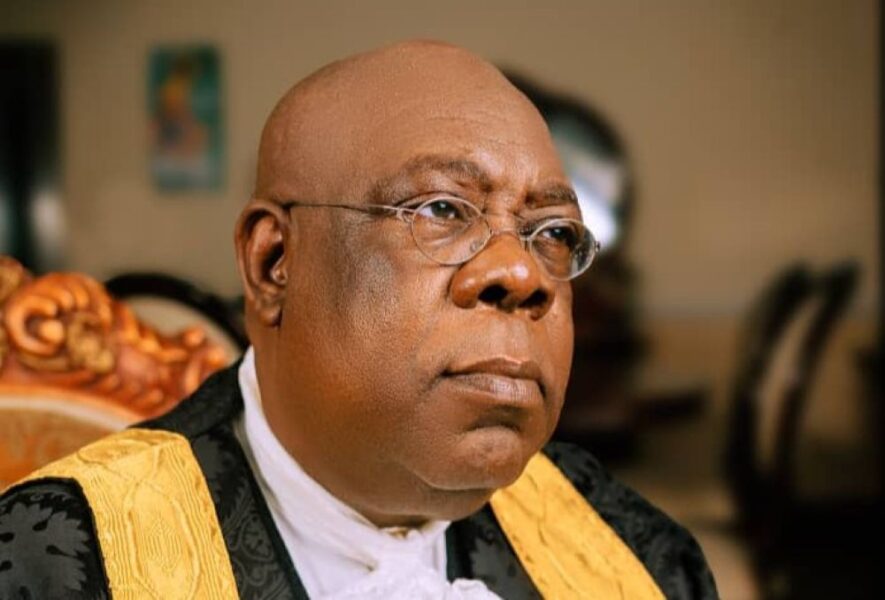
Asiwaju Kalejaye (SAN) is the founder and chairman of Eagle102.5 FM, Ilese-Ijebu