
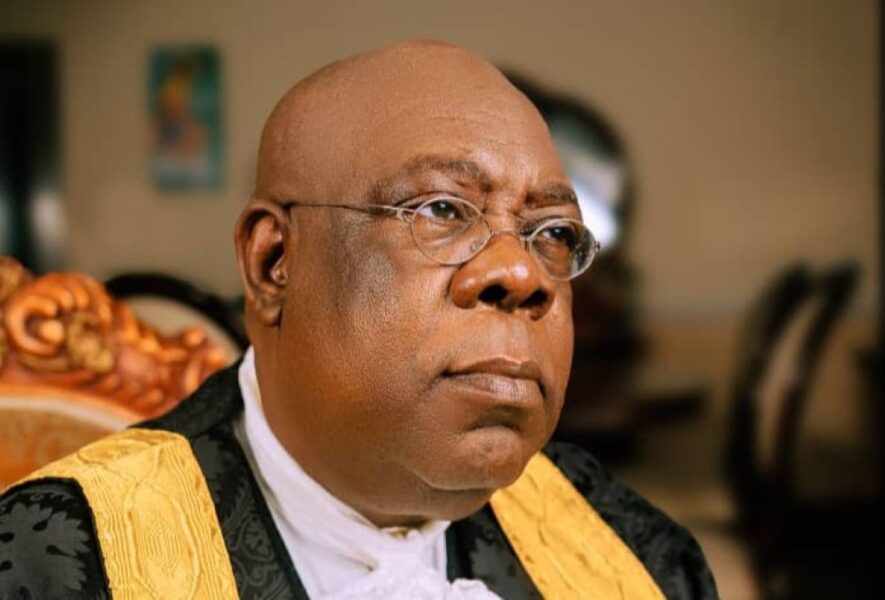

By Kunle Kalejaye
As Nigeria moves into another intense election cycle, the political landscape is alight with heavy political theatrics. On podiums, at rallies, and across social media, the rhetoric is flying fast and loose and at times becoming very toxic. In the high-stakes theater of political campaigns, it is common to hear politicians and party loyalists declare to cheering crowds that they will crush the opposition, or warn that anyone who votes against them will see fire. Phrases like “If you vote for the other party, expect to be driven out of town” or “We will flush out certain tribes from this constituency before election day” or ” vote for party X and see pepper!” or ” this time is you do or die” ;are no longer rare.
In the Federal Capital Territory FCT, the Chairman of an Area Council was reported to have warned residents who do not support his political party to relocate ahead of 2027. This prompted Amnesty International Nigeria to condemn the remarks as a “call to violence.”
Among the most prominent cases is that of a Senator, who was invited and questioned by the Nigeria Police Force over a viral video in which he was heard telling supporters in Ilesa, “Until the day of election, when you see any Accord party member here in Ilesa, kill them.” In Borno State, a Commissioner threatened that those who refuse to support his party in 2027 “will be flogged,” while separately warning that anyone who crossed his party would have a finger broken.
.
In Yobe State, the situation went from the bizarre to the ridiculous as the state chairman of a political party triggered widespread condemnation after urging married women in the state to leave their husbands if the men stand in the way of their voting for the party in the coming general elections, a remark he later withdrew following public outcry.
However, as this aggressive and bellicose campaign talk escalates across our federating states, a vital legal question emerges: where does passionate rhetoric end, and when does it transform into a crime under Nigerian law?
Campaign rhetoric crosses the legal threshold into electoral intimidation the moment it moves beyond robust partisan debate or policy critique and enters the realm of coercion, hate speech, or the threat of harm.
Ordinarily, Nigerian courts allow wide breathing room for robust political debate. The judiciary has long established that spontaneous verbal outbursts, often categorised as mere vulgar abuse, do not easily satisfy the threshold for a criminal conviction. As established in the landmark case of Uzoukwu v. Ezeonu(1991), empty, generalised political boasting or loose insults or targeted political banter thrown in a moment of passion do not constitute an actionable breach of the constitutional Rights protected under their Constitution. At most, it may only give rise to a defamatory or other forms of action.
The law does not micromanage political anger, and law enforcement cannot lawfully arrest a speaker purely for yelling fiery, non-specific slogans on a soapbox without separate evidence of criminal intent or an immediate, physical capability to execute harm.
However, the immunity of the political podium vanishes the moment campaign language transitions into targeted intimidation, coercion, or systemic terror.
When rhetoric shifts from political bravado into specific threats, such as telling an audience, “We know where the opposition candidate’s children go to school, and they will pay the price”, it triggers the heavy machinery of Nigeria’s primary criminal statutes: the Criminal Code Act, applicable in the Southern states, and the Penal Code Act, which governs the North.
Under Section 396 of the Penal Code, threatening another with injury to their person, reputation, or property to cause alarm faces up to two years in prison, spiking drastically to seven years if the threat is to cause death or grievous hurt. Similarly, Section 86 of the Criminal Code states that threatening another with injury or violence to compel them to act or abstain from acting is an offense punishable by up to one year in prison. If the threat is made to prevent a citizen from exercising their legal rights, such as campaigning or voting, it becomes highly actionable. Furthermore, putting a targeted death threat into writing against an electoral official or an opposition candidate violates Section 323 of the Criminal Code, carrying a penalty of up to seven years in prison.
To complement these foundational criminal laws, the Electoral Act draws an uncompromising line specifically for the election season. Under Section 92, political campaigns must avoid intemperate or base language likely to provoke violence, while explicitly prohibiting the enlistment or training of individuals to display physical force. Section 93 makes it illegal to threaten anyone with force or violence to compel support for a candidate or party. Statements like “Vote for us or your safety cannot be guaranteed at the polling booth” violate this provision directly. Individual candidates face a maximum fine of one million Naira or up to twelve months in prison, while political parties face a two million Naira fine for a first offense. Most critically, Section 128 dictates that using threats, violence, or restraint to compel voters to vote or refrain from voting incurs a fine of one million Naira or three years’ imprisonment.
Modern Nigerian campaigns are no longer fought just on physical public squares or town halls; they are fought just as fiercely online via WhatsApp, X, TikTok, and Facebook and other emerging social media platforms. For party proxies and candidates who think they can safely broadcast threatening voice notes or share menacing messages stating, “We are tracking the IPs of opposition supporters and we will deal with you,” the law has a sharp answer. Under Section 24 of the Cybercrimes (Prohibition, Prevention, etc.) Act, using electronic communication to send messages aimed at causing criminal intimidation, injury, or severe annoyance is a serious offense punishable by hefty fines and prison terms of up to three years. The internet is not a lawless vacuum, and digital campaign thuggery leaves a permanent electronic trail and digital footprints that prosecutors can easily track.
Ultimately, claims of political theater or content or campaign banter offer absolutely no defense if statements induce genuine fear or suppress voter participation. A threat backed by the capability or context to execute it ceases to be protected free speech.
Political campaigns should be platforms of competing ideas, not theatres of war.
Political campaigns must remain a contest of ideas rather than an arena of terror. For candidates and party faithful alike, understanding these intersecting laws is vital. In our fragile political climate, guarding our tongues on the podium and our fingers on the keyboard is not just good politics; it is the law.
Asiwaju Kalejaye (SAN) is the founder and chairman of Eagle102.5 FM, Ilese-Ijebu