
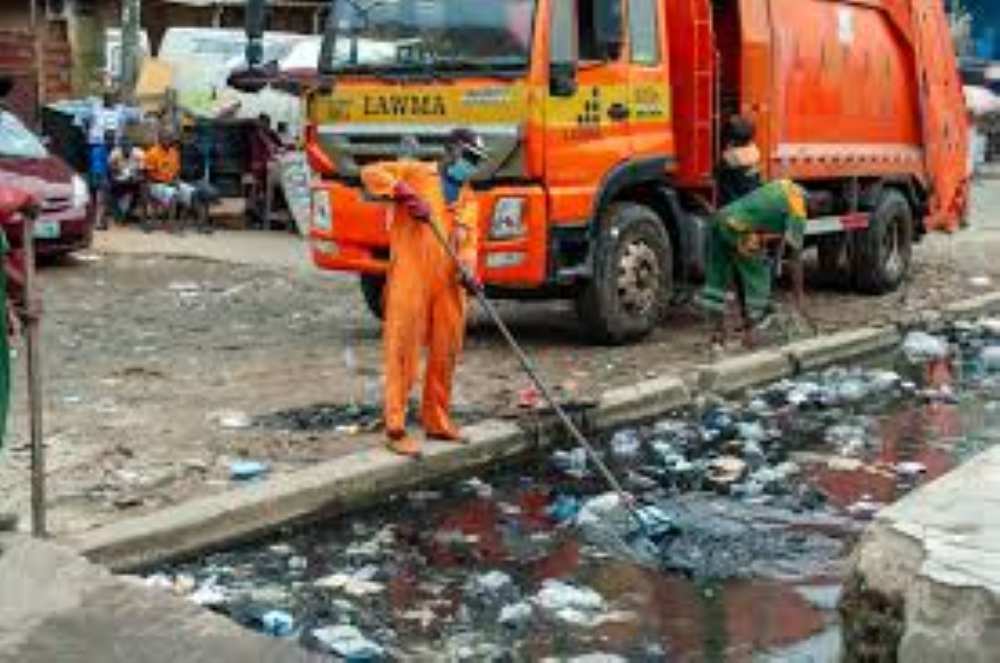
The Lagos State Waste Management Authority (LAWMA) is working with the state House of Assembly to make waste sorting at source mandatory for residents as part of efforts to transform the state’s waste management system.
LAWMA Managing Director, Muyiwa Gbadegesin, disclosed this on Tuesday, saying the policy is aimed at moving Lagos from a linear waste management model to a circular economy.
Gbadegesin said implementing the new direction would require substantial investment, broad stakeholder engagement and an amendment to the law establishing LAWMA.
“One of the things we’re working on now with the House of Assembly is to make it mandatory for sorting your waste at source, and we’ll engage the public in that process as well,” he said.
According to him, the state’s circular economy roadmap includes sorting waste at source, reducing dependence on landfills through transfer loading stations, establishing material recovery facilities, and developing waste-to-energy and biogas plants.
He said LAWMA had also begun reforms in the Private Sector Participation (PSP) programme, particularly the waste collection segment.
The authority, he explained, had engaged waste managers in Nigeria and established six working groups to review the sector, with each group expected to submit its report within one month.
The reports will subsequently be presented to the Ministry of Environment and Water Resources, the Lagos State Executive Council and the House of Assembly for consideration and approval.
Gbadegesin said the proposed PSP reforms would provide the necessary investment, infrastructure and equipment, including trucks, required to improve waste collection across the state.
He clarified that while PSP operators would primarily be responsible for waste collection, the state government would handle disposal through transfer stations, material recovery facilities and planned waste-to-energy and biogas projects.
“For us to have a clean, sustainable Lagos, we must have the capacity to collect, we must have the capacity to transport, to treat and safely dispose of waste,” he said.
The LAWMA boss said Lagos generates about 16,000 tonnes of waste daily, making extensive investment in infrastructure, efficient logistics, sustained enforcement and citizen participation essential.
He linked the challenge to the state’s estimated population of about 24 million people, noting that the volume of waste generated was further compounded by the large number of people living in informal settlements.
Gbadegesin said close to four million people live in shanties across Lagos, with waste from such communities often ending up in public spaces, roads and drainage channels.
He, however, identified the situation as an opportunity for private-sector investors to enter the waste management industry and provide regulated services for which they could receive structured payments.
On enforcement, he said LAWMA had expanded the operations of its enforcement units, with five units deployed daily in collaboration with the Lagos State Environmental Sanitation Corps, Rapid Response Squad, Environmental Task Force and OPMESA.
He said the enforcement drive was focused on preventing illegal dumping, ensuring proper waste management in markets and arresting and prosecuting environmental offenders.
“Our policy is zero tolerance for indiscriminate waste disposal. We do not want anyone in Lagos dumping waste in public spaces,” he said, adding that offenders would face the full extent of the law.
Gbadegesin also highlighted LAWMA’s public advocacy initiatives, including the LAWMA Academy, which he said was designed to educate young people about proper waste management.
He added that advocacy teams regularly visit markets and estate communities to promote compliance.
According to him, LAWMA has also established waste management task forces in each local government area in partnership with local councils.
The initiative brings together PSP operators, Community Development Associations, Community Development Committees and environmental health officers to drive public education and compliance.
Gbadegesin expressed confidence that the ongoing reforms and planned investments would significantly improve waste management in Lagos and reduce the recurring crises associated with refuse disposal in the coming years.