
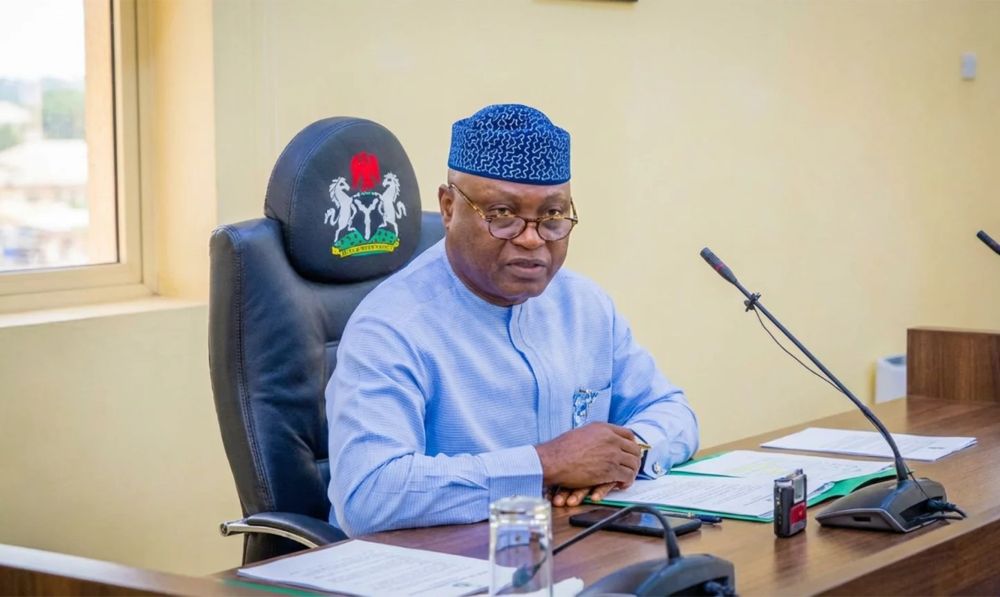

Ekiti State Governor, Biodun Oyebanji, has identified industrialisation and the expansion of small businesses as major priorities of his administration’s second term, saying the state must now turn its infrastructure investments into increased productivity and economic prosperity.
Oyebanji made this known on Saturday during a media chat with journalists in Ado-Ekiti, a day after he was inaugurated for a second term in office.
The governor said his administration spent its first term laying the foundation for economic growth through investments in roads, electricity, agriculture and other critical infrastructure, adding that the next phase would focus more directly on creating jobs, expanding businesses and increasing the value of locally produced goods.
He said the state would not abandon infrastructure development but would place greater emphasis on industrialisation and support for micro, small and medium-sized businesses.
“Over the next three years, I want to see more of the agricultural products produced in Ekiti processed locally and converted into finished goods that can generate greater economic value,” Oyebanji said.
“Our next major focus, therefore, is industrialisation and support for small businesses. That is the only way we can deepen our shared prosperity agenda.”
According to him, the administration constructed roads, connected communities that had previously lacked electricity, improved township roads and developed farm roads during its first term.
He said nearly 400 kilometres of roads would have been constructed by the end of 2026, while the state’s internally generated revenue had also recorded significant growth over the past three to four years.
Oyebanji said the second-term strategy would involve creating a conducive environment for investors while ensuring that small-scale entrepreneurs had access to affordable funding.
He specifically mentioned welders, tailors, hairdressers, barbers and other small business operators as beneficiaries who needed financial support to expand their enterprises.
“We invested substantially in infrastructure during the first term, and I believe we have made considerable progress. This does not mean we will abandon infrastructure development, but we will now give greater attention to industrialisation and supporting small businesses,” he said.
The governor also linked industrial development to the agricultural sector, saying farmers must have reliable off-takers capable of purchasing their produce and connecting them to companies involved in processing and value addition.
He described catalysing productivity as the central objective of his second term, noting that the goal was reflected in the 2027 budget already presented to the Ekiti State House of Assembly.
“We will do everything possible to ensure that our economy becomes more productive,” he said.
Ekiti airport gets 24-hour operations plan
Oyebanji also disclosed plans to improve the operational capacity of the Ekiti airport as part of efforts to attract investment and support industrialisation.
He said the administration would work to ensure the airport could operate for 24 hours instead of shutting down at 6pm, while also addressing its inability to accommodate aircraft during adverse weather conditions.
According to him, an Instrument Landing System has already been installed, with a certification team currently assessing the facility.
“We have been working on these issues. We installed an Instrument Landing System and the certification team is on the ground assessing it,” he said.
80km township roads under rehabilitation
On road infrastructure, the governor said the state was still developing a master plan for road connectivity, while several interventions had already been carried out on township roads across the state.
He disclosed that work was being reactivated on nearly 80 kilometres of township roads, particularly as Ado-Ekiti continues to expand into new areas.
“As we speak, we are reactivating work on nearly 80kms of township roads. You are also aware that Ado-Ekiti continues to expand daily, with development spreading into new areas,” Oyebanji said.
Ekiti plans fresh water supply interventions
The governor also promised further interventions in the state’s water supply system, with emphasis on replacing ageing water pipelines.
He said the administration had developed a comprehensive programme to address challenges in the sector and had established water consumers’ committees in communities to improve the effectiveness of the system.
“In this second term, we have a comprehensive programme to address the challenges facing water supply, with a major focus on replacing the old pipes,” Oyebanji said.