
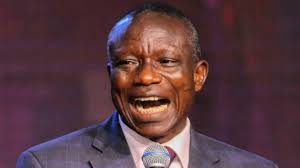

The Pentecostal Fellowship of Nigeria (PFN) has urged the federal government to take urgent and decisive steps to tackle worsening insecurity and killings across the country, warning that persistent violence now poses a serious threat to national unity and public confidence.
The call was made on Sunday at the conclusion of the fellowship’s nationwide three-day fasting and prayer programme held across the 36 states and the Federal Capital Territory to commemorate the 2026 Global Pentecost Day.
Addressing journalists after the exercise, PFN National President, Bishop Francis Wale Oke, said the spiritual programme, which involved about 65 million Pentecostals nationwide, was organised in response to the alarming wave of insecurity, killings and bloodshed across Nigeria.
According to him, Nigerians can no longer afford to remain silent in the face of escalating banditry, kidnapping, terrorism and violent attacks.
“We have fasted. We have prayed. Now we speak. We speak because silence aids the killers and their sponsors,” Oke declared.
The cleric lamented what he described as the growing devaluation of human life and the seeming normalisation of violence in different parts of the country.
He cited the continued captivity of some abducted Chibok schoolgirls and Leah Sharibu, alongside the killing of Deborah Samuel, as painful examples of unresolved tragedies and failures of justice.
Oke described states such as Taraba State, Plateau State, Benue State and Southern Kaduna as “daily killing fields”, adding that Edo State, Kogi State, Ondo State and parts of Kwara State had also witnessed repeated attacks by armed bandits.
According to the PFN president, information available to the fellowship indicated that insecurity had displaced many residents and forced more than 30 traditional rulers in parts of Kwara State to flee their communities.
He also raised concerns over cases of kidnapping, rape and killings in Borno State, Niger State, Sokoto State and Kaduna State.
Oke particularly referenced the recent abduction of teachers and students in Oyo State, describing the killing of teacher Michael Oyedokun and another victim as tragic and horrifying.
He said the gruesome killing deeply disturbed him for days and reflected what he described as a broader pattern of attacks against innocent Nigerians and Christian communities.
“These are unspeakable and despicable acts of terror,” he said, while accusing political leaders of continuing with “business as usual” despite the deteriorating security situation.
The bishop further expressed concern over attacks on farmers by armed herders and violent extremists, arguing that the government had demonstrated inadequate political will to decisively confront insecurity.
“Nigerians are sick and tired of this evil,” he stated, adding that political leaders appeared more focused on elections than on protecting lives and property.
He also criticised what he described as the rehabilitation of repentant insurgents and reports of their integration into security structures, warning that such actions could further erode public trust.
According to Oke, the insecurity crisis now extends beyond the loss of lives, as it has begun to undermine national unity, discourage investment, accelerate the migration of skilled Nigerians and weaken citizens’ confidence in the state.
The PFN president disclosed that the fellowship’s National Executive Council met on May 19, 2026, to deliberate on the worsening security crisis before resolving to embark on nationwide spiritual mobilisation through fasting and prayer.
The fellowship consequently called on the federal government to fulfil its constitutional responsibility of protecting citizens irrespective of religion or ethnicity and to seek international partnerships where necessary to address the security challenge.
Oke also urged churches across the country to remain united, intensify prayers and continue speaking against violence and injustice.
While expressing confidence in divine intervention, he stressed that prayer alone must be complemented with decisive governmental action and accountability.
He called on authorities to ensure that perpetrators of violence face justice rather than rehabilitation.
Responding to questions on the role of churches in supporting victims of violence, Oke said religious organisations did not control arms or security operations but could continue to influence government policies and provide humanitarian assistance.
“We do not control arms and ammunition; neither do we control the military. We can only influence the political class to do their work and move decisively,” he said.
He added that churches had continued to commit substantial resources towards providing relief materials, food, clothing and support for rebuilding homes and churches destroyed in affected communities.
The cleric concluded with prayers for forgiveness, healing and peace, expressing hope that God would restore peace and stability across Nigeria.