
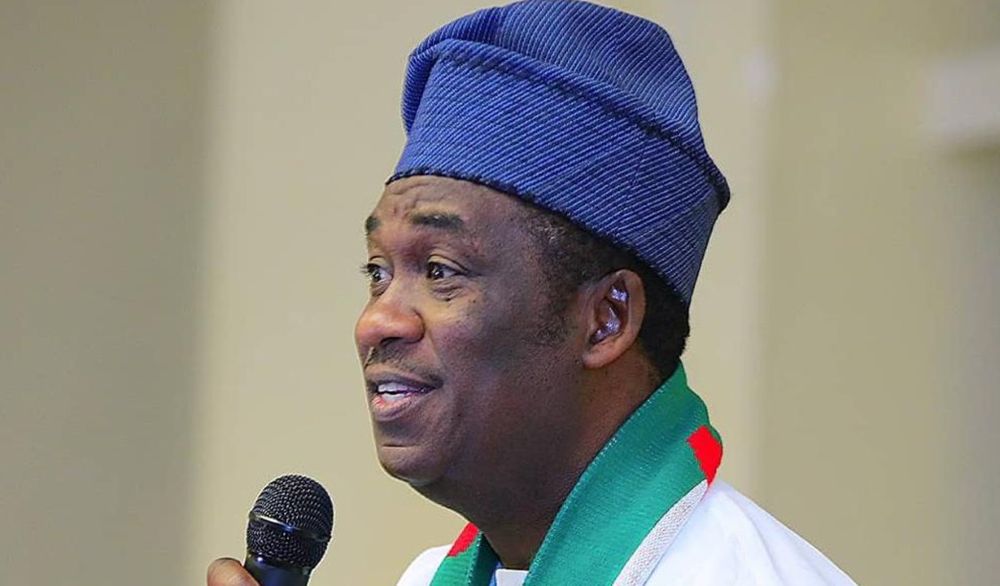

Lagos State Deputy Governor, Obafemi Hamzat, has explained that the worsening waste situation across the state is being driven by a combination of rising refuse generation, inadequate collection trucks and operational challenges confronting private waste operators.
Hamzat, who spoke during an interview on Nigerian Info 99.3FM on Tuesday, said the Lagos Waste Management Authority (LAWMA) was being required to manage a volume of waste significantly beyond the government’s initial projections.
According to him, the state initially estimated that Lagos generated about 13,000 tonnes of waste daily but later discovered that the actual figure was closer to 17,000 tonnes.
He said the discrepancy had affected the government’s ability to properly plan and manage waste collection, stressing that accurate data was critical to solving the problem.
“How do you plan for something you can’t measure?” Hamzat asked, noting that the government could not effectively manage the waste crisis without knowing the actual volume being generated.
He also pointed to activities taking place on Lagos streets as part of the difficulty in accurately determining the total amount of waste produced.
Hamzat explained that people living on the streets, as well as those carrying out activities such as scraping roads, also generate refuse, making the volume more difficult to quantify.
The Deputy Governor further identified inadequate functional trucks among the major factors affecting waste collection.
He said Lagos has about 420 Private Sector Participants (PSPs) involved in waste collection, with each operator expected under its agreement with the government to have at least two trucks.
This, he said, means the state should have more than 800 trucks available for waste collection.
However, Hamzat disclosed that many PSPs no longer had the required number of operational vehicles because some trucks had become unusable while some operators had shut down.
He added that rising diesel costs had also placed additional pressure on the private waste operators, some of whom approached the government seeking approval to increase their tariffs.
The state government, he said, rejected the proposed tariff increase but opted to provide additional financial support to the operators instead.
“Finally we said, no, don’t increase the tariff. Let the state pay,” Hamzat said.
He said the government subsequently discovered that many of the trucks still in operation were no longer fit for service, forcing the state to order additional vehicles.
Hamzat said the government planned to provide two trucks for each of Lagos’ 57 local government areas and local council development areas, amounting to 114 trucks.
He added that the state had separately ordered another 100 trucks to strengthen waste collection operations.
However, the delivery of the vehicles has been delayed.
Hamzat said the trucks were initially expected to arrive in July, but the supplier later moved the delivery date to September.
He said the delay had contributed to the current difficulties in refuse collection across Lagos.
Hamzat consequently defended LAWMA against being solely blamed for the worsening waste situation, saying the agency was operating under conditions that were not adequately anticipated when the waste management plans were formulated.
“So when I said I will not throw LAWMA under the bus, it’s because of something like that. It’s not technically their fault,” he said.
The Deputy Governor, however, acknowledged that the government must accept responsibility for areas where it could have acted earlier, including the procurement of additional waste collection trucks.
He said the Lagos State Government was taking steps to address the challenges and improve waste collection across the state.