
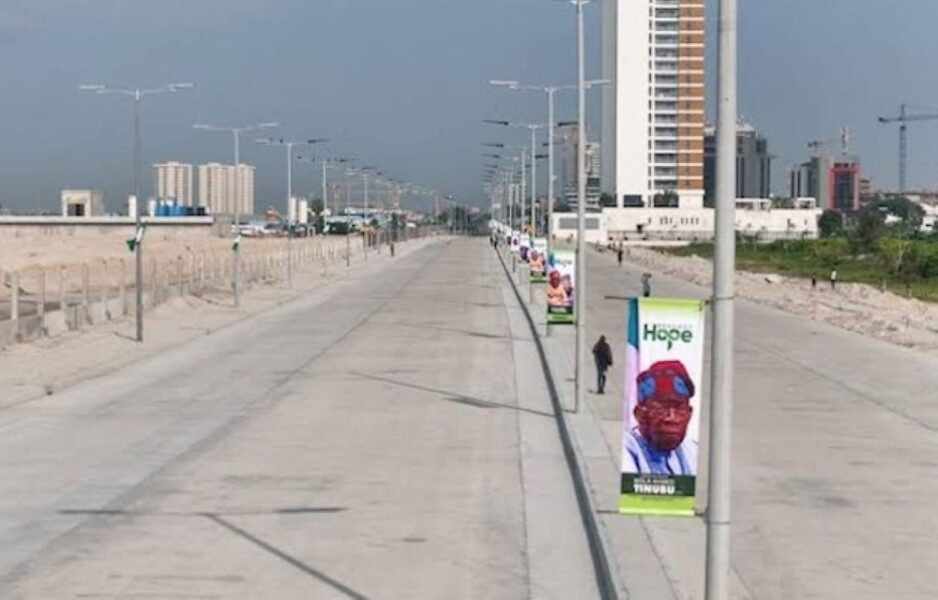

The Federal Government has given motorists and other road users on the Lagos section of the Lagos-Calabar Coastal Highway two weeks to comply with safety regulations or risk the closure of the route.
Federal Controller of Works in Lagos State, Olufemi Dare, issued the ultimatum on Monday during an inspection tour of the highway, saying the directive followed persistent safety breaches, vandalism and other illegal activities along the road.
Dare said the Minister of Works, David Umahi, had directed the ministry to reassess the situation after two weeks, with closure becoming an option if there was no significant improvement.
“Within two weeks, if there’s no improvement on all these issues, then we have no option than to come back and shutdown this road,” he said.
According to the controller, the government could rely on the Lekki-Epe Expressway if the coastal highway is temporarily closed.
He explained that the Lagos-Calabar Coastal Highway remained under construction and should ordinarily not have been opened to traffic before the completion of its bridges.
The Lagos section stretches about 103 kilometres, comprising a 47-kilometre Section 1 and a 56-kilometre Section 2.
The two sections have 20 major bridges, with 10 in each section, although several remain under construction.
Dare raised particular concern over motorists exceeding the prescribed 30km/h speed limit on the unfinished highway.
He said some drivers had been travelling at speeds of up to 120km/h despite ongoing construction and bridge works.
“We have said your speed on the coastal road must not be more than 30 kilometres per hour,” he said.
Dare also said lives were being lost on the highway “almost every other day”, warning that the government could no longer allow dangerous driving and other violations to continue.
Beyond speeding, authorities are targeting several activities considered threats to safety and the integrity of the highway.
Articulated vehicle operators were warned against using the road as a parking area, while illegal U-turns, hawking, animal grazing, motorcycles and tricycles have also been prohibited along the route.
Dare said people creating illegal U-turns would be arrested and prosecuted, while authorities would also remove shanties and other illegal structures along the highway.
Security has also been stepped up, following an agreement between the Federal Ministry of Works and the Lagos State Police Command.
Dare said the increased police deployment followed meetings between Umahi and the Lagos State Commissioner of Police, Fatai Oladipo.
“Beginning from this morning, we’ve started to see the improvement in deployment of police. And we are going to have more,” he said.
The government is also planning a stronger community-based surveillance system.
Dare said 40 coastal guards had been approved for Section 1, with four expected to be drawn from each community along the route. Additional personnel would be recruited for Section 2.
He said the guards would work with the police to monitor the highway and protect infrastructure, while previously engaged guards had faced attacks from vandals.
Vandalism remains another major concern for the government.
Dare disclosed that about five kilometres of ClearVu fencing had been removed, while concrete covers covering about 18 kilometres had been vandalised and taken away.
He said the fencing was being removed at night after vandals cut and carted away sections used to separate nearby communities from the highway.
As a result, the government is considering replacing vulnerable steel fencing with concrete barriers in areas where vandalism is persistent.
CCTV cameras are also being planned to strengthen surveillance.
Dare said the government would reorganise and train the coastal guards under the direct supervision of the Lagos State Police Command.
With construction still ongoing, the controller urged motorists to observe the 30km/h speed restriction and comply with all safety measures, warning that failure to address the violations within two weeks could force the federal government to shut the Lagos section of the highway.