
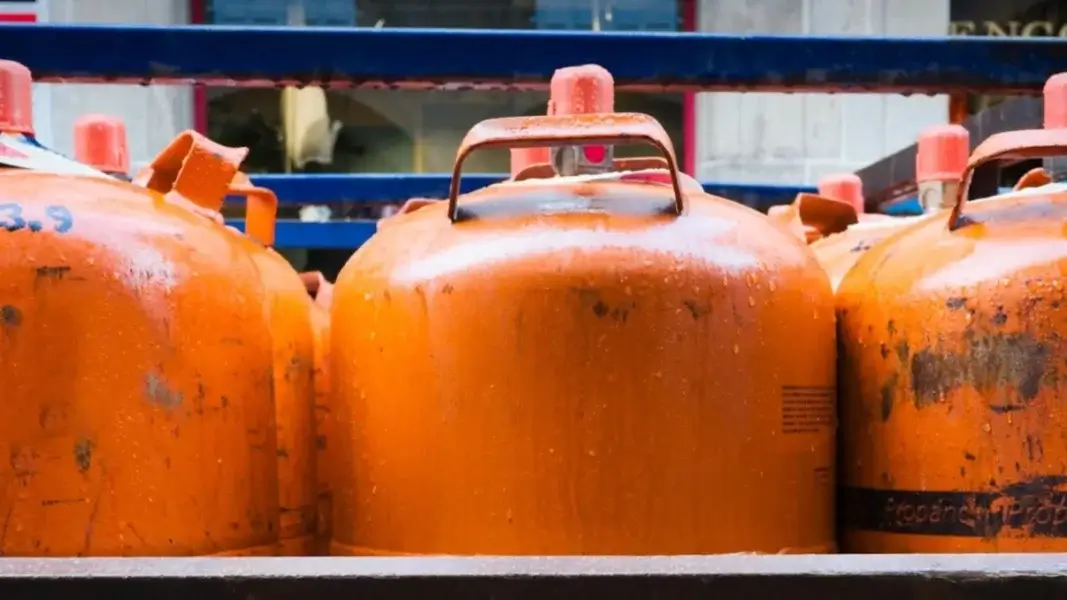

Nigerian households are beginning to enjoy some relief as the retail price of Liquefied Petroleum Gas (LPG), popularly known as cooking gas, declines across several parts of the country following improved product supply and lower depot prices.
Market checks by gas marketers show that cooking gas prices have started falling in major cities, reversing the sharp increases recorded in recent months.
However, the reductions vary from one location to another due to transportation costs, proximity to supply depots and retailer pricing.
Current retail prices indicate that consumers in Lagos, Ibadan and Abeokuta now purchase cooking gas for between N1,100 and N1,350 per kilogramme.
Speaking on the latest market trend, the National President of the Nigerian Association of Liquefied Petroleum Gas Marketers (NALPGAM), Edu Inyang, said prices remain higher in parts of northern Nigeria because of the additional cost of transporting products to those areas.
According to him, consumers in Kano and Kaduna currently pay between N1,300 and N1,550 per kilogramme, while residents of Maiduguri and other parts of the North-East spend between N1,350 and N1,650 per kilogramme, the highest prices recorded nationwide.
Inyang explained that the national retail price now ranges from N1,100 to N1,650 per kilogramme, although some neighbourhood retailers continue to charge above that range where logistics and distribution costs remain high.
He attributed the price decline to increased LPG supply from domestic producers and imports, lower depot prices, stronger competition among marketers and the end of panic buying that had previously tightened supply.
“Following reports of improved LPG supply and softer depot prices in late June 2026, retail cooking gas prices have started easing in some markets, although the reduction has not been uniform across Nigeria. Transport costs, distance from depots, and retailer margins still create noticeable differences between cities.
“Overall, the national retail range is roughly N1,100 to N1,650 per kilogramme, with some neighbourhood retailers charging slightly above this range where logistics costs remain high. The recent easing reflects lower depot prices as supply improved, increased product availability from domestic sources and imports, reduced panic buying and hoarding after government market interventions, and more competition among marketers in major cities,” he said.
The latest development marks a turnaround from the sharp price increases experienced from May, when supply shortages and rising depot prices pushed cooking gas costs to record levels across many parts of the country.
Based on prevailing market prices, refilling a 5kg cylinder now costs between N5,500 and N8,250, while a 6kg cylinder attracts between N6,600 and N9,900.
Consumers refilling a standard 12.5kg cylinder are expected to pay between N13,750 and N20,625, depending on their location and retailer.
Despite the downward trend, industry operators warned that prices have yet to stabilise nationwide.
Communities located far from major LPG depots are likely to continue paying higher prices because of transportation and distribution expenses.
Industry stakeholders, however, expressed optimism that sustained supplies from local producers, supported by steady imports, would further reduce prices in the coming weeks, provided there are no major disruptions to product supply or logistics.
Also commenting on the market situation, the National Chairman of the Liquefied Petroleum Gas Retailers Branch of the Nigeria Union of Petroleum and Natural Gas Workers (NUPENG), Ayobami Olarinoye, said normalcy is gradually returning to the sector.
According to him, neighbourhood retailers currently purchase cooking gas from plant operators at between N1,300 and N1,500 per kilogramme, depending on location, before selling to consumers at N1,600 to N1,800 per kilogramme.
“The inflow and supply are gradually getting back to normal. There is more availability,” Olarinoye said.
“The price is also coming down gradually. As of today (Monday), we buy from between N1,300 and N1,500 per kg from the marketers (plant operators), depending on the locations, while we sell between N1,600 and N1,800 per kg to consumers. This also depends on the location and associated logistics.”
Cooking gas prices had surged by about 140 per cent in several parts of the country, climbing from an average of N1,000 per kilogramme in January and February to as high as N2,400 per kilogramme between May and June.
The sharp increase prompted marketers to conclude plans for large-scale LPG imports to boost availability and improve affordability after local production failed to meet domestic demand.
In response to the situation, the Minister of State for Petroleum Resources (Gas), Ekperikpe Ekpo, warned operators against hoarding and profiteering while the industry regulator began issuing licences for LPG imports to strengthen market supply.