
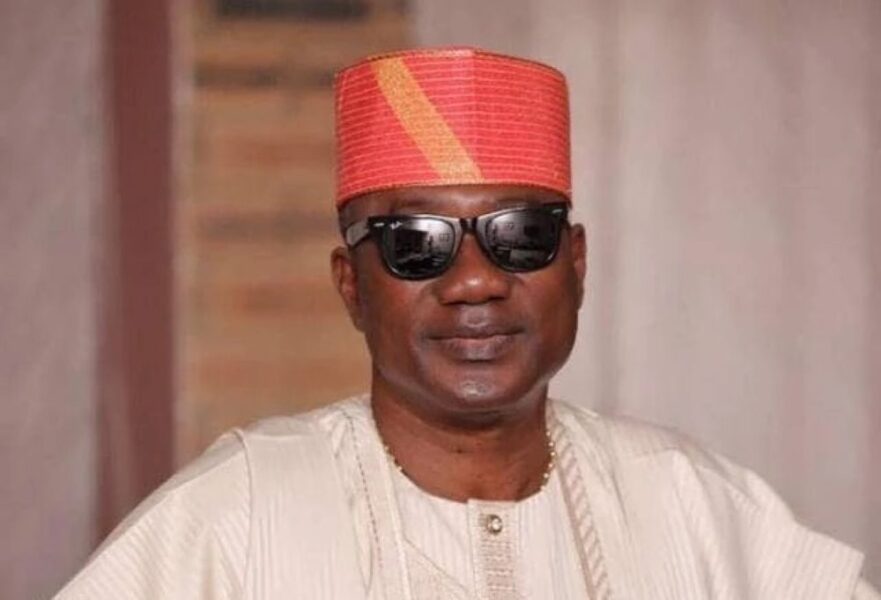

A retired Assistant Inspector General of Police, Tunji Alapini, has endorsed the proposed establishment of state police in Nigeria, describing it as a necessary reform that could improve security at the grassroots and enhance community-based policing across the country.
Speaking on Wednesday during Frontline, a current affairs programme on Eagle 102.5 FM, Ilese-Ijebu, Ogun State, Alapini argued that concerns over possible abuse of state police should not discourage Nigeria from pursuing a reform that could strengthen the nation’s security architecture.
According to him, the demand for state police reflects a desire among Nigerians to improve security outcomes rather than a rejection of the current policing system.
“I’m not saying it has failed. It has not failed. But people are clamouring to see that things could be better. There is always room for improvement in anything. So if there is room for improvement, there is room for state police,” he said.
The former police chief noted that Nigeria’s growing security challenges, including terrorism, kidnapping, banditry and communal conflicts, require fresh strategies beyond existing approaches.
“The security situation in the country calls for doing the same thing in a different manner. I think the introduction and the clamour for state police is a welcome development. Nothing ventured, nothing gained. If we explore it and see how it works, no matter what, we stand to benefit from it,” he stated.
Alapini acknowledged concerns about funding, training and accountability within the police system but maintained that such challenges should not be used to dismiss the proposal.
He said efforts should instead focus on building a stronger and more effective policing institution, while commending the current Inspector General of Police for ongoing reforms and directives aimed at improving policing.
Making a case for state police, Alapini identified community policing as one of its greatest advantages.
He argued that recruiting and deploying officers within their local environments would enhance intelligence gathering and make it easier to identify suspicious individuals and activities.
Recalling how communities previously monitored newcomers, he lamented the decline of communal vigilance, which he described as a critical element of effective policing.
“Twenty years ago, if a stranger came into a town, people would notice and monitor the person. That is part of what we have lost, and those are the things we want to regain through community policing,” he said.
Drawing from his experience as Commissioner of Police in Edo State, Alapini cited the traditional Edionwere system, where community leaders maintain awareness of residents and newcomers within their neighbourhoods.
According to him, similar local structures can play a crucial role in strengthening security if integrated into a community policing framework.
He further argued that security challenges could be addressed more effectively when residents take responsibility for monitoring activities within their wards and reporting suspicious movements before threats escalate.
“We have 36 states and the FCT. Each state has local governments, and each local government has wards. If people know what is happening within their wards and take responsibility for their communities, the country will become a better place for all of us,” he said.
On fears that governors could use state police to harass political opponents, Alapini admitted that such concerns were valid but insisted they should not halt efforts to reform the security sector.
He pointed out that allegations of political interference already exist under the current centralised policing arrangement and argued that safeguards could be strengthened as the system evolves.
“Nothing ventured, nothing gained. Let us start first. If we see abuse, let us address that abuse,” he said.
Alapini also expressed confidence that governors would not have absolute control over state police appointments.
According to him, the proposed framework envisages the involvement of a state police commission and other oversight mechanisms that would screen and approve key appointments.
“I don’t think the governor has been given the power alone to appoint the police. There will be a commission and a screening process. The governor may have a preference, but other members of the committee will also have their say,” he explained.
On the relationship between federal and state police structures, the retired police chief said responsibilities could be clearly defined to prevent conflicts of authority.
He explained that federal police would continue to handle national assets and matters of federal interest, while state police would focus on security issues within their respective jurisdictions.
Alapini also advocated stronger prosecution of criminal offenders, arguing that swift and certain punishment remains one of the most effective deterrents against crime.
He commended recent measures reportedly introduced by some state governments to tackle insecurity and urged other governors to adopt similar approaches to ensure that offenders are prosecuted without unnecessary delays.
The retired police officer equally noted that effective security cannot be achieved by law enforcement agencies alone, calling on Nigerians to revive communal responsibility and remain vigilant about activities within their neighbourhoods.