
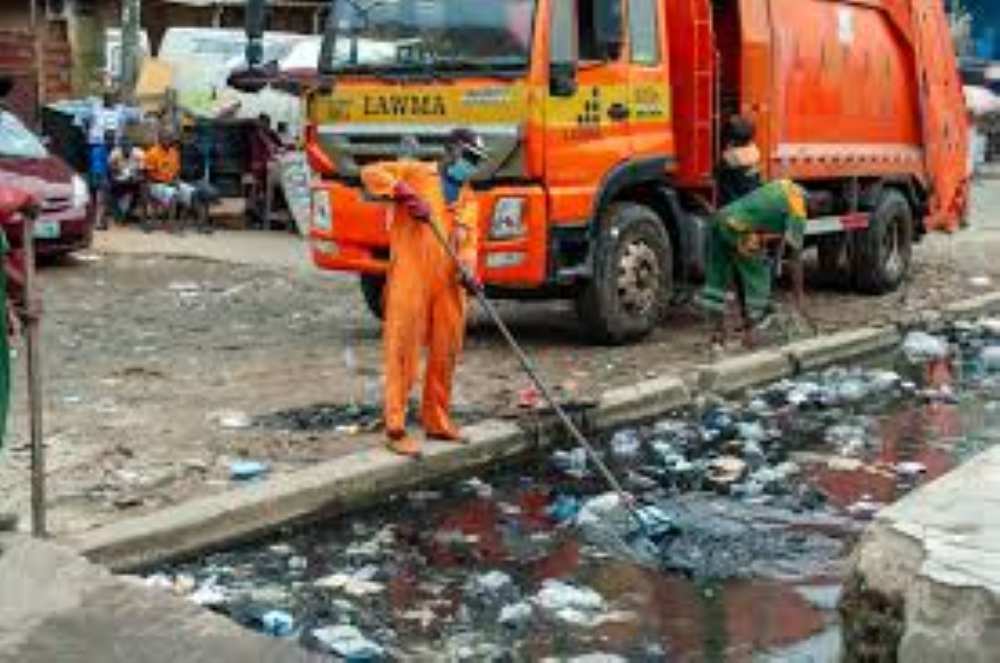
The Lagos State government has announced plans to establish a special “Waste Police” as part of a broader strategy to curb indiscriminate refuse dumping and improve environmental sanitation across the state.
The initiative was unveiled on Saturday as the administration of Governor Babajide Sanwo-Olu intensified efforts to tackle environmental abuse, particularly around roads, motor parks and transport corridors where illegal waste disposal remains a persistent challenge.
The decision followed a strategic meeting involving the Lagos State Ministry of Transportation, the Lagos State Waste Management Authority (LAWMA), the National Union of Road Transport Workers (NURTW), and the Road Transport Employers Association of Nigeria (RTEAN).
At the meeting, stakeholders agreed to strengthen collaboration aimed at maintaining cleaner transport facilities and promoting proper waste management practices throughout the state.
Commissioner for Transportation, Oluwaseun Osiyemi, said transport unions would play a central role in ensuring that parks and garages remain clean, orderly and compliant with environmental regulations.
He stressed that operators of transport facilities must take responsibility for maintaining sanitary conditions within their domains while discouraging street trading and improper waste disposal.
Osiyemi disclosed that the ministry would soon begin enforcement operations to ensure compliance with environmental standards across all transport hubs.
He warned that roads were not designated refuse dumps and stated that the government would no longer tolerate practices that compromise its sanitation goals.
To enhance monitoring and enforcement, the commissioner announced that the proposed Waste Police would be recruited from transport union members across Lagos’ local government areas.
According to him, the unit will be tasked with monitoring motor parks and surrounding communities to prevent indiscriminate dumping of waste and promote cleaner environments.
“The Waste Police will serve as the eyes and ears of government within the transport sector.
Their responsibility will be to ensure that refuse is not dumped indiscriminately and that environmental standards are maintained at all times,” Osiyemi said.
Deputy Chief of Staff to the Governor, Sam Egube, described the initiative as consistent with international best practices where transport operators partner with governments to safeguard public infrastructure and maintain environmental standards.
He urged transport stakeholders to support the programme, noting that cleaner transport corridors would improve public health outcomes and contribute to sustainable urban development.
Also speaking, the Governor’s Special Adviser on Transportation, Sola Giwa, called on transport unions to embrace greater responsibility in environmental management.
He urged the leadership of NURTW and RTEAN to ensure strict adherence to sanitation directives across all parks and garages under their supervision.
According to Giwa, the effectiveness of the initiative will depend largely on the willingness of transport operators to enforce discipline among their members and uphold cleanliness within the transport ecosystem.
LAWMA Managing Director, Muyiwa Gbadegesin, commended transport unions for supporting the reintroduced environmental sanitation exercise and encouraged them to deepen their commitment to the programme.
He noted that effective waste management in a megacity such as Lagos requires collective responsibility and cannot be left solely to government agencies.
Gbadegesin revealed that LAWMA currently evacuates approximately 13,000 tonnes of waste daily across the state, highlighting the scale of the challenge facing waste management authorities.
He also noted that transport unions facilitate the movement of an estimated 22 million commuters daily, positioning them as key partners in promoting environmental awareness and responsible waste disposal practices.
According to him, the widespread presence of transport union members across Lagos provides a valuable opportunity to strengthen environmental monitoring and encourage proper waste management at the grassroots level.