
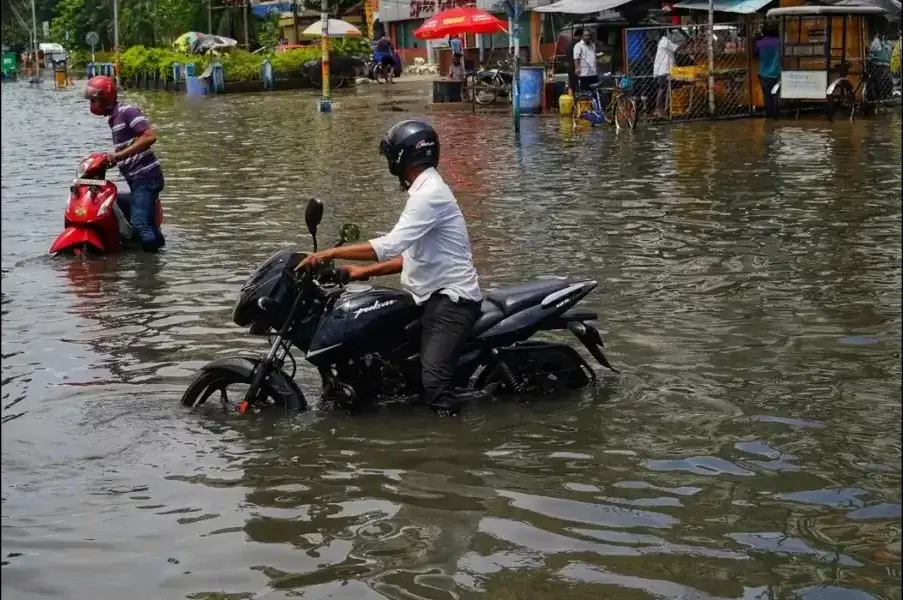

Lagos State Government has directed residents living in low-lying and flood-prone communities to relocate temporarily to safer, higher ground following a seven-day flood alert issued by the Nigeria Hydrological Services Agency (NIHSA).
Commissioner for the Environment and Water Resources, Tokunbo Wahab, said the state was treating the latest flood advisory with utmost seriousness and had intensified monitoring across vulnerable locations.
The advisory, identified as NFA-2026-2022, covers Lagos and 14 other states and warns of rising river levels that could trigger flooding in susceptible communities.
Among the locations identified by the Lagos State Government are Eti-Osa, Lagos Island Local Government Area, Oke-Ira Nla in Ajah, Kirikiri around the seaport, Ilaje Waterfront Jetty and Jetty Terminal B.
Other communities urged to remain on high alert include Isheri North, Kara, Itowolo, Ajegunle, Majidun, Ogolonto and parts of Agboyi, particularly settlements downstream of Isheri Olofin.
Wahab urged residents in affected communities not to wait until floodwaters begin rising before taking precautionary measures.
“When the signs point to danger, the safest decision is to move early. No property is worth risking a life,” he said.
He advised residents of flood-prone areas to remain on higher ground until the peak of the resurgent rainy season passes.
According to the commissioner, Lagos typically experiences a second phase of the rainy season from September, with increased rainfall, rising water levels and tidal influences capable of worsening flooding in vulnerable areas.
Communities located around rivers, lagoons, wetlands, drainage channels and other waterways were therefore advised to closely monitor official forecasts and comply with safety directives.
Wahab particularly warned communities along the Ogun River and other major waterways to exercise heightened caution, noting that heavy rainfall upstream and rising water levels in connected river systems could affect downstream areas of Lagos.
The warning is for the period covering September 19 to 25, during which residents in vulnerable locations are expected to remain vigilant and prepare for possible temporary evacuation.
NIHSA’s flood forecasting system uses rainfall patterns, river levels and hydrological models to generate warnings intended to support early action and reduce the risk of loss of life and property.
The Lagos government also directed affected local governments, emergency management agencies and community leaders to activate early-warning and response mechanisms.
Residents were advised to move people, livestock and valuable belongings to safer locations where necessary.
Wahab said the state would continue monitoring rainfall patterns, river levels and other hydrological developments in collaboration with relevant federal agencies. Drainage cleaning, maintenance and monitoring would also continue across the state.
Residents were further warned against dumping refuse into drains, canals and waterways, as blocked drainage channels can worsen flooding and slow the recession of floodwaters.
Motorists and pedestrians were advised not to attempt to cross flooded roads, bridges or fast-moving water.
The commissioner stressed that protection of lives and property remained a priority, urging Lagos residents to treat official flood forecasts as critical safety information and respond promptly to evacuation advisories.
NIHSA’s flood monitoring platform provides real-time flood-risk information and early warnings, while its 2026 Annual Flood Outlook contains seasonal flood-risk assessments for communities across Nigeria.
Wahab assured residents that the state government would continue to provide updates and deploy measures aimed at reducing flood risks as weather and hydrological conditions evolve.