
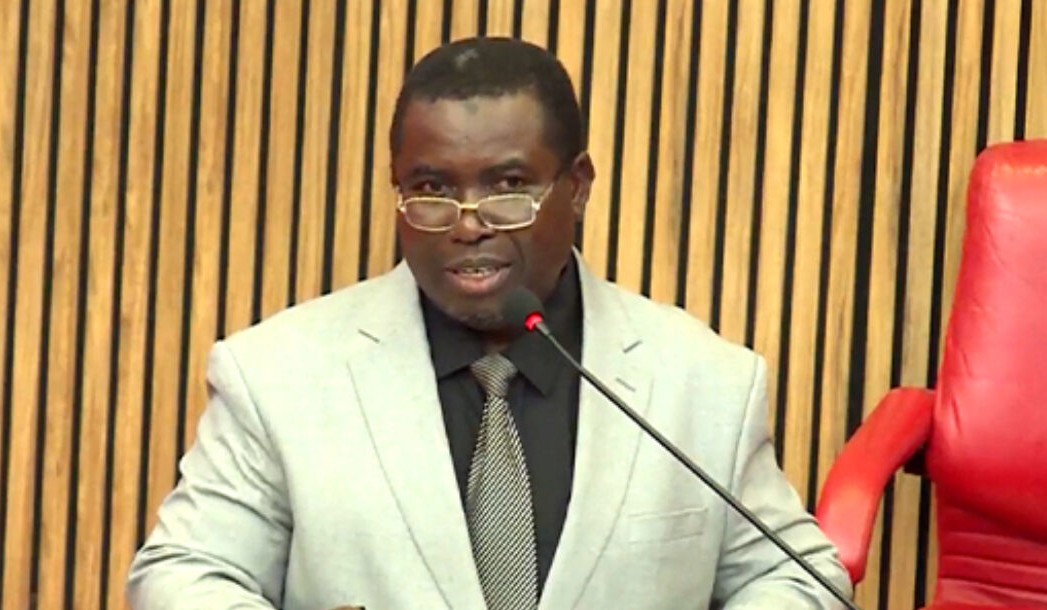

The Independent National Electoral Commission (INEC) has expressed confidence in its preparedness for Saturday’s governorship election in Ekiti State, following the successful conduct of a mock accreditation exercise across selected local government areas.
INEC Chairman, Prof. Joash Amupitan, said the strong performance of the Bimodal Voter Accreditation System (BVAS) during the exercise demonstrated the commission’s readiness to deliver a credible, transparent and acceptable election on June 20.
The mock accreditation was conducted in parts of the state, including Ado and Ikere Ekiti, to assess the efficiency of the BVAS devices that will be deployed for voter accreditation during the governorship poll.
Speaking with journalists in Ado Ekiti, Amupitan said he personally joined other senior INEC officials to monitor the exercise and evaluate the commission’s operational readiness.
According to him, the exercise was designed to test critical election infrastructure, particularly the technology that will support voter accreditation and result management.
“The mock accreditation is essentially to test our facilities, especially our technology, and ensure that everything required for the election is functioning optimally,” he said.
Amupitan disclosed that the BVAS machines performed efficiently throughout the exercise, with fingerprint and facial verification taking between five and seven seconds on average for each voter.
He explained that the commission chose to assess the process directly in the field rather than relying solely on reports from its headquarters.
“We did not want to speak from an air-conditioned boardroom in Abuja or rely solely on paperwork. We went to the theatre of operations to see for ourselves how our systems are performing,” he said.
The INEC chairman added that observations from the exercise showed that the commission’s technological safeguards against voter identity fraud and result manipulation were functioning effectively.
“What we observed during the Mock Accreditation Exercise confirms that our technological defence against identity theft and result manipulation is robust and fully operational,” he stated.
To address any unforeseen technical issues, Amupitan said the commission had deployed upgraded backup BVAS devices and stationed technical personnel across the state to provide immediate support.
“We have provided upgraded backup BVAS devices and deployed technical engineers across the state. Any malfunctioning device can be replaced within minutes,” he assured.
On result management, the INEC boss stressed that only verified election results would be uploaded to the INEC Result Viewing Portal (IReV), warning against attempts to misinterpret delays caused by network challenges.
“We will not upload results we cannot verify. In areas without network coverage, transmission is impossible until officers reach covered zones. That delay must not be used to discredit the process. Measures have been put in place to prevent incorrect results from being uploaded to IReV,” he said.
Amupitan also assured residents that logistical arrangements had been concluded to ensure the timely commencement of voting across the state’s 2,445 polling units.
“Our goal remains the simultaneous opening of polls in all 2,445 polling units at exactly 8:30 a.m. on election day. We have directed electoral officers to ensure that polling units are activated on time and that logistics are fully in place before election day,” he said.
The INEC chairman further stated that the commission had worked closely with security agencies to guarantee a peaceful electoral process and safeguard all participants.
According to him, the police, Department of State Services (DSS), Nigeria Security and Civil Defence Corps (NSCDC), and other relevant agencies have been mobilised to ensure adequate security before, during and after the election.
“We have worked closely with the police, DSS, Civil Defence and other security agencies. Our priority is to ensure that voters, election officials, journalists and observers are safe throughout the electoral process,” Amupitan said.