
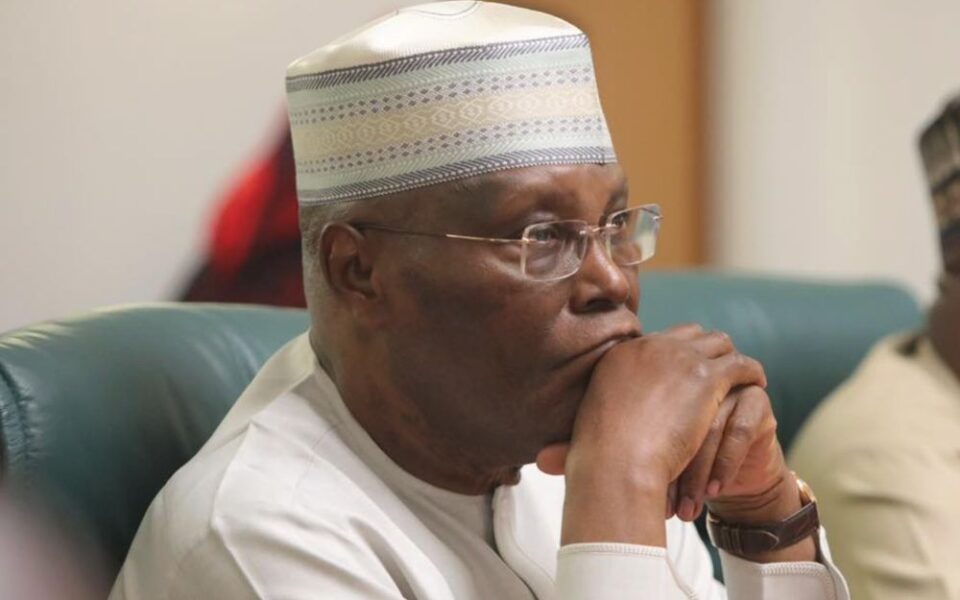
The proposed return of the fuel subsidy by former Vice President Atiku Abubakar has come under scrutiny from Nigerians, with callers demanding clearer explanations of how the policy would work and whether it could avoid the abuses associated with the former subsidy regime.
The concerns were raised on Monday during an interview with Atiku’s Senior Special Assistant on Public Communication, Phrank Shaibu, on Frontline, a current affairs programme on Eagle 102.5 FM, Ilese-Ijebu.
Atiku, who is preparing for the 2027 presidential election, has proposed replacing the previous import-based subsidy system with what he calls a production subsidy under his Atiku Economic Recovery Plan (AERP).
Under the proposal, qualifying public and private refineries would receive crude oil at a preferential price, subject to conditions on production, efficiency and domestic supply.
The campaign’s central argument is that “the subsidy will follow the barrel” rather than the marketer.
Refineries benefiting from the arrangement would also be required to supply an independently verified quantity of petroleum products to the Nigerian market at prices that reflect the advantage derived from cheaper crude.
However, several callers questioned whether the proposal could prevent a repeat of the abuses that characterised the previous subsidy system.
A caller, AB from Epe, argued that the problem may not have been subsidy itself but the way it was administered.
He questioned whether Atiku’s proposal could once again channel public funds to independent petroleum marketers without delivering corresponding benefits to Nigerians.
Responding, Shaibu said the proposed model would be fundamentally different because government support would be tied directly to crude supplied to qualifying domestic refineries.
He said both the crude and resulting petroleum products would be monitored, insisting that the benefit would ultimately be reflected in the pump price.
Another caller, Omooba, rejected the proposed return of subsidy altogether, describing the previous system as fraudulent.
He argued that Atiku should instead focus on strengthening domestic refining capacity and providing basic services such as healthcare and education.
Emmanuel, also from Epe, commended Shaibu but urged the Atiku campaign to devote more attention to explaining its policies rather than attacking the Bola Tinubu administration.
He also questioned how possible alliances involving the African Democratic Congress (ADC) and other opposition parties would affect candidates seeking legislative seats if the parties agree to support one another at the presidential level.
Emmanuel further cautioned the campaign against confrontational exchanges with journalists, saying such interactions could make it difficult for audiences to distinguish between interviewers and interviewees.
Similarly, Taiwo from Ijebu-Ife questioned Atiku’s plan and asked whether Nigerians had received sufficient benefits from the support previously given to the Dangote Refinery under the Muhammadu Buhari administration.
He urged the former vice president’s campaign to explain the outcome of that intervention before proposing another subsidy arrangement.
Shaibu defended the proposal, saying the intervention for Dangote occurred when fuel subsidy was still in place, while Atiku’s plan would support a broader network of domestic refineries.
He also accused the Tinubu administration of frustrating the Dangote Refinery by restricting its access to crude, forcing it to import crude and, at one point, purchase crude in dollars.
Shaibu stressed that Dangote would not be the only beneficiary of Atiku’s proposed production subsidy, saying modular and other domestic refineries would also qualify.
According to him, the objective is to increase local refining and ensure that government support follows crude supplied to refiners rather than being paid to marketers.
Meanwhile, the presidency has rejected calls to restore the petrol subsidy.
Minister of Information Mohammed Idris said subsidy removal had freed N15.8 trillion for the federation between June 2023 and December 2025, with the funds shared among the federal government, states and local governments.
The government has maintained that restoring the subsidy would reverse economic gains and place additional pressure on public finances.
Shaibu, however, argued that the simultaneous removal of the subsidy and devaluation of the naira created severe economic pressure without adequate measures to cushion Nigerians.
He said the hardship prompted Atiku to reconsider his earlier position and develop a production-based subsidy model.
Responding to broader demands from callers for details of the campaign’s economic programme, Shaibu said the issues raised were contained in Atiku’s policy blueprints, which he said would be unveiled progressively.
He maintained that subsidy restoration remained central to the campaign’s economic programme and would have wider effects across the economy.
Shaibu said the policy would be implemented if Atiku wins the 2027 presidential election, promising that Nigerians would experience relief under the proposed administration.