
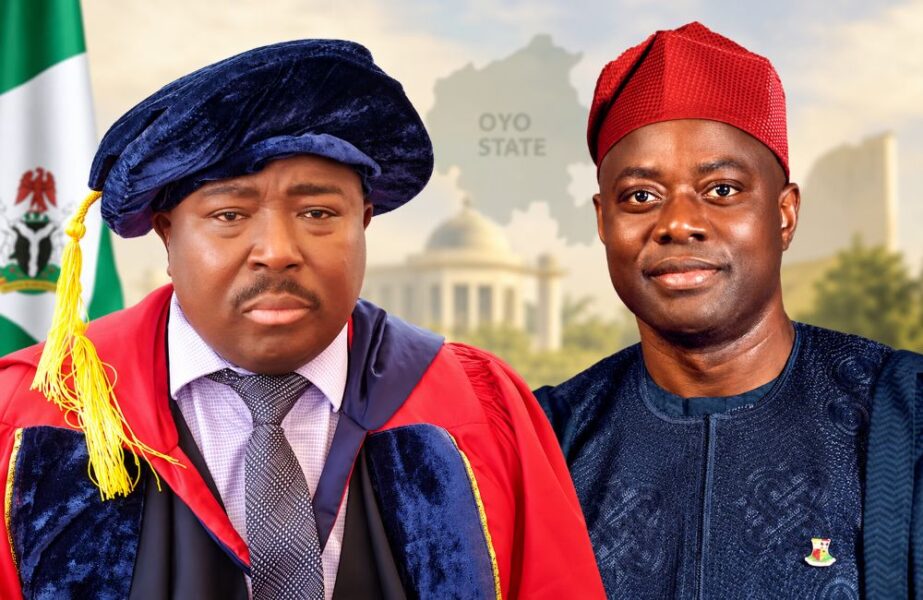

The Senator Sharafadeen Alli Campaign Organisation has launched a scathing attack on Governor Seyi Makinde over the continued use of diesel-powered generators to operate streetlights in Oyo State, describing the governor’s explanation for the arrangement as evidence of “gross incompetence” and leadership failure.
The campaign organisation, in a statement by its Director of Media and Publicity, Bisi Oladele, faulted Makinde for blaming inadequate electricity supply for his administration’s dependence on diesel generators, arguing that the governor has had sufficient legal and institutional powers to pursue alternative electricity solutions.
According to the campaign council, the Electricity Act 2023, signed into law by President Bola Tinubu, empowered states to generate, transmit and distribute electricity within their jurisdictions.
It said Oyo State subsequently established the Oyo State Electricity Regulatory Commission and completed the transfer of regulatory oversight from the Nigerian Electricity Regulatory Commission (NERC).
“Governor Makinde, therefore, has no excuse for his own incompetence and glaring failure,” the campaign council said.
It argued that Oyo State, alongside 16 other states, had taken advantage of the opportunities created by the new electricity framework and now possessed the authority to attract investors, license electricity projects and develop power solutions tailored to local needs.
“But what did we have in Oyo State?” the group asked, turning its criticism specifically to the administration’s Independent Power Project.
The campaign council described the 11-megawatt project as a “phantom project” valued at ₦8.5 billion, alleging that it failed to produce any electricity despite the huge public expenditure committed to it.
“Not only did the project fail spectacularly, no single watt of electricity was generated by the extremely wasteful Makinde administration,” it alleged.
The group further stated that after billions of naira had been spent on the project awarded to Elektron Energy, the Makinde administration terminated it late last year, leaving residents without the promised benefits.
It described the project as a “white elephant” and accused the government of failing to provide value for public funds committed to the initiative.
The campaign council also compared Oyo’s electricity efforts with projects in other states, citing Abia, Akwa Ibom and Ekiti as examples of states where it claimed alternative electricity projects had produced measurable output.
It said Abia had generated 188 megawatts, Akwa Ibom 191 megawatts and Ekiti 8.6 megawatts.
The group challenged the governor to explain why Oyo had not secured a sustainable electricity source for critical public infrastructure, including streetlights, the government secretariat in Agodi and health facilities that were identified as beneficiaries of the power project.
“The people of Oyo State deserve to know why the project has not provided a sustainable source of electricity for critical public infrastructure,” it said.
The campaign organisation was particularly scathing over the continued use of diesel generators to power streetlights, alleging that the arrangement had become excessively expensive and unreliable.
It claimed that many major roads had again been left in darkness because the diesel-powered streetlights were no longer functioning.
“Apart from the prohibitively inflated cost of fueling, the generators are being replaced every six months in a deal that is at best job for the boys,” the group alleged.
The campaign council also took aim at Makinde’s political activities outside the state, accusing him of “junketing all over the country” in pursuit of what it called an “elusive national network” for his presidential ambition.
It argued that the governor should concentrate on resolving challenges within Oyo rather than blaming external factors for problems that, in its view, fall within the capacity of his administration to address.
The group said the electricity excuse was particularly embarrassing because Makinde is an electrical engineer.
“The purpose of leadership is to solve problems, not to repeatedly describe them or use them as excuses for failure,” it said.
The campaign council added that after more than seven years in office, Makinde could no longer continue blaming external forces for problems it believed were within the authority and capacity of his administration.
It proposed a different electricity strategy for the state, including solar-powered streetlights, embedded generation, renewable energy, independent distribution networks and greater private-sector participation.
“This will be the focus of Sharafadeen Alli when he becomes the governor of Oyo State next year,” the campaign council said.
“What the people do not need is a government that spends heavily on publicity-driven projects and later manufactures excuses when such projects turn to be a fiasco.”
The latest criticism adds to the growing political contest around Makinde’s record and the 2027 governorship race in Oyo State, with Alli’s camp using the streetlight controversy and the state’s electricity projects to question the administration’s management of public infrastructure.