
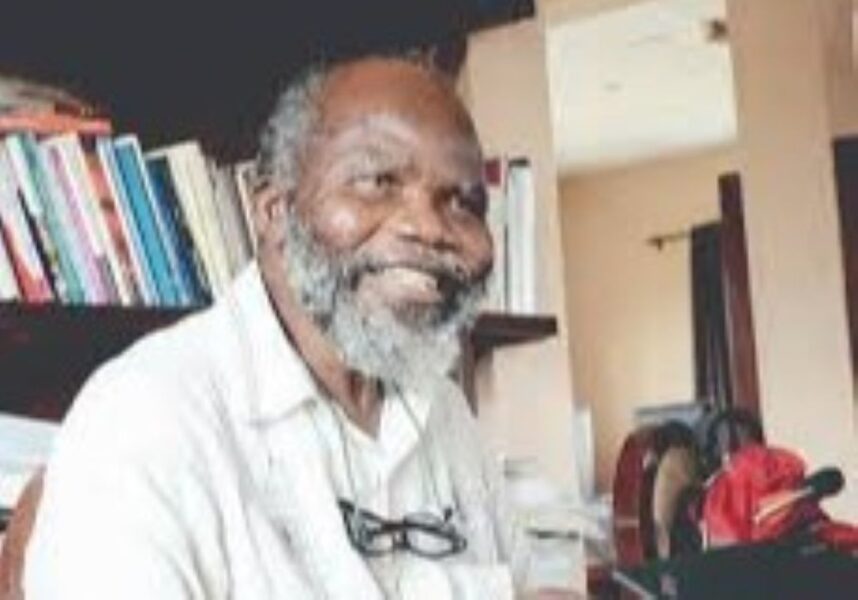

A retired Nigerian Army officer, Major General Ishola Williams, has argued that Nigeria’s prolonged debate over state policing is unnecessary, insisting that the country already operates a practical version of state police through regional security outfits such as Amotekun.
Williams made the remarks on Friday during an interview on Frontline, a current affairs programme aired on Eagle 102.5 FM, where he called for urgent constitutional amendments to formally recognise and regulate existing sub-national security structures.
According to the retired general, the Southwest security outfit, Amotekun, already performs state policing functions despite lacking full constitutional recognition.
“We’ve already got a state police in practice. What we actually need now is a constitutional amendment to recognise and properly structure what already exists on the ground,” Williams stated.
He maintained that continued political debate over the establishment of state police was delaying critical reforms needed to address worsening insecurity across the country.
Williams argued that Nigeria’s security crisis stems largely from poor coordination among agencies, overlapping responsibilities, and policy inconsistency. He warned that the country was currently battling both insecurity and severe economic hardship simultaneously.
“The reality is that Nigerians are now living in fear and deprivation at the same time. People cannot afford basic living, and at the same time, they cannot move safely,” he said.
“When both fear of hunger and fear of violence exist together, then the nation is in danger.”
The retired military officer criticised the federal government’s handling of recent security incidents, particularly in the South-West, accusing authorities of lacking urgency and operational seriousness.
He also questioned the visibility and effectiveness of the Office of the Special Adviser to the President on Homeland Security, saying there appeared to be little public communication or strategic coordination despite growing insecurity nationwide.
“We have an office that was created for homeland security, but there is no public engagement, no briefing, no visible strategy,” he said.
Williams further criticised proposals aimed at recruiting large numbers of untrained personnel to tackle insecurity, describing such approaches as ineffective against organised criminal groups.
“So they felt the best thing is recruiting 1,000 foreign guards. Those 1,000 people, have they been trained already to be able to rescue those who are kidnapped in the forest?” he queried.
He expressed concern over what he described as systemic confusion within Nigeria’s security architecture, revealing that foreign colleagues often question the country’s security coordination mechanisms.
“My colleagues outside the country ask me whether we have people who are thinking at all in our Homeland security system,” he said.
Williams also lamented the failure of authorities to implement security proposals submitted by experts over the years, particularly recommendations on protecting schools from attacks and kidnappings.
The retired general stressed the importance of distinguishing between public safety and national security responsibilities, arguing that government agencies often conflate the two, thereby weakening operational effectiveness.
“Stop confusing public safety with security. That is a confusion and government is confused,” he said.
He further criticised what he described as symbolic official visits to insecurity-hit communities, referencing a recent delegation to Oriire Local Government Area of Oyo State.
“All of them were well-dressed, they were not going like people who are going to an area with lack of safety,” he stated.
Williams also faulted delayed responses to kidnapping incidents, arguing that rapid deployment of special forces, drones, and helicopters could significantly improve rescue operations.
Referring to the abduction involving the sister of former Minister of Power, Bayo Adelabu, and her twin sons, he noted that police responded swiftly in that instance, unlike in some other kidnapping cases.
“As soon as they announced that they had been kidnapped, special forces with drones and helicopters should have gone after these people,” he said.
Reiterating his position on state policing, Williams insisted that the country’s challenge lies not in creating new institutions but in strengthening and legalising existing structures.
“What is Amotekun? Tell me. What is Amotekun?” he asked repeatedly.
The retired officer also accused the federal government of deliberately delaying decisions on state police and restructuring.
“They continue to deceive people. President Bola Ahmed Tinubu is not interested in state police. He is not interested in restructuring,” he alleged.
Williams further claimed that institutional interests were frustrating meaningful police reforms, accusing the Inspector General of Police of attempting to maintain central control over policing structures.
“The IGP wants to protect his interests. But we want independent state police,” he said.
He warned that insurgency and criminal activities were becoming increasingly entrenched, particularly in the North-East, while weak regional cooperation across West Africa was worsening the broader security situation.
“So the whole security system along the West Coast is in a mess,” he stated.
Williams concluded that Nigeria’s insecurity problem is rooted in constitutional ambiguity, weak coordination, and lack of accountability, insisting that only structural reforms backed by law can deliver lasting solutions.