
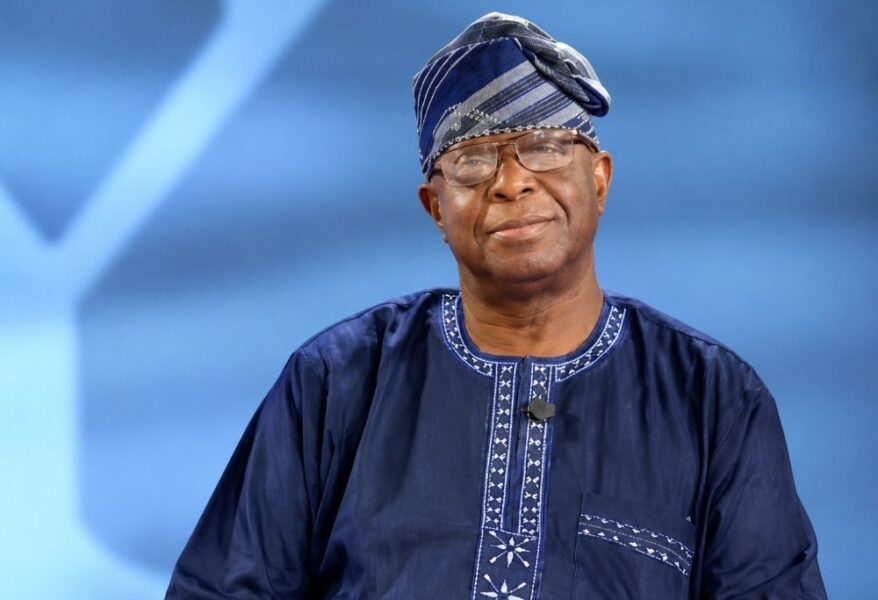

A research professor at the Nigerian Institute of International Affairs (NIIA), Professor Femi Otubanjo, has said President Bola Tinubu’s absence from the 81st United Nations General Assembly should not be used as the primary measure of Nigeria’s diplomatic standing, arguing that the country’s national interest and domestic governance are more important.
Otubanjo said the president’s annual leave, the representation provided by Vice President Kashim Shettima and the nature of diplomatic engagements should all be considered in assessing Tinubu’s decision not to attend the gathering in New York.
He spoke on Tuesday during an appearance on Frontline, a current affairs programme on Eagle 102.5 FM, Ilese-Ijebu, Ogun State.
According to him, the debate has focused excessively on the president’s physical presence at the UNGA without considering whether Nigeria is adequately represented and whether its diplomatic objectives are being pursued.
“Majority of people talk without putting it in the proper context. Number one context is that President Bola Tinubu is on his annual leave and when he is on leave, he leaves the work of the office to other people to do it and UNGA is not so important,” he said.
Otubanjo maintained that presidential attendance at the General Assembly was not compulsory, stressing that the vice president, as the second-highest-ranking official in the country, was capable of representing Nigeria.
“It is not compulsory for a president to be at the United Nations General Assembly. What is important is representation, and this time we are represented by the number two man in the country,” he said.
Shettima arrived in New York on September 20 to lead Nigeria’s delegation and is expected to deliver the country’s national statement while participating in high-level meetings and bilateral engagements with world leaders, international organisations and development partners.
Tinubu has now missed the UNGA in person for the third consecutive year, after Shettima represented him at the 79th and 80th sessions in 2024 and 2025. The president personally attended the 78th session in 2023.
The repeated absence has generated political criticism. Former Vice President Atiku Abubakar argued that although Shettima could represent Nigeria, repeated delegation could not substitute for the president’s personal authority and visibility at a major international diplomatic gathering.
The Federal Government has rejected the criticism, insisting that Shettima is attending with Tinubu’s full mandate and that Nigeria’s diplomatic interests will be fully represented.
Information Minister Mohammed Idris also said the president’s absence was linked to his ongoing annual leave.
For Otubanjo, however, the more important question is what Nigeria seeks to achieve through its participation.
“The main thing is Nigeria’s national interest,” he said.
He also questioned the assumption that a president’s physical presence at an international gathering automatically results in substantive diplomatic achievements.
According to him, some encounters between heads of government at major summits are brief exchanges rather than detailed working sessions.
“If you have a meeting with the president of France, and for five to ten minutes, it is that we enjoy, we are happy with our relationship, I hope we continue, we will continue. These are the kinds of complementary things that I’ve said at those meetings. They are not working meetings,” he said.
The professor argued that more substantive diplomatic discussions could continue through bilateral channels and other forms of communication, including remote engagements.
He cited the experience of the COVID-19 pandemic as evidence that government leaders can conduct official business without always being physically present.
“COVID taught all of us how to work remotely. The president is talking to his ambassadors and talking to businessmen outside Nigeria,” Otubanjo said.
Nigeria’s image begins with domestic governance
Beyond the immediate controversy over Tinubu’s absence from New York, Otubanjo said Nigeria’s international reputation was inseparable from the way the country is governed at home.
“A nation’s domestic image determines its international image,” he said.
He argued that Nigeria’s increasing global visibility meant that domestic developments could no longer be isolated from the country’s international reputation.
“There is no remote country as information is easily accessed from any location on earth,” he added.
Otubanjo consequently called for a domestic reset focused on good governance, accountability, transparency and prudent management of public resources.
He criticised what he described as misplaced government spending priorities, citing expenditure on infrastructure, an aircraft and religious pilgrimage.
“Nigeria has leaders who don’t know how to order their priorities and focus on their people,” he said.
The professor argued that Nigeria’s ambition to exert greater influence in Africa and the wider international system would require corresponding improvements in governance and public accountability.
Nigeria is seeking a stronger role in organisations including the African Union and ECOWAS and is also advocating greater African representation, including a permanent African seat on a reformed United Nations Security Council.
Otubanjo said those ambitions should be supported by credible domestic governance, arguing that international influence would be difficult to sustain if it was not matched by improvements in the lives of Nigerians.
Tinubu’s absence comes as Nigeria participates in the 81st UNGA, whose high-level general debate is scheduled to run from September 22 to 28.
The Federal Government says the Nigerian delegation will advance the country’s interests on peace and security, economic development, climate action, reform of the global financial architecture, sustainable development and international cooperation.
President Tinubu, who left Nigeria on August 30 for a working vacation in Europe, has extended his stay by a few days and is expected to return at the weekend, according to the Presidency.
It said he had remained in contact with developments at home and continued to direct government affairs while away.