
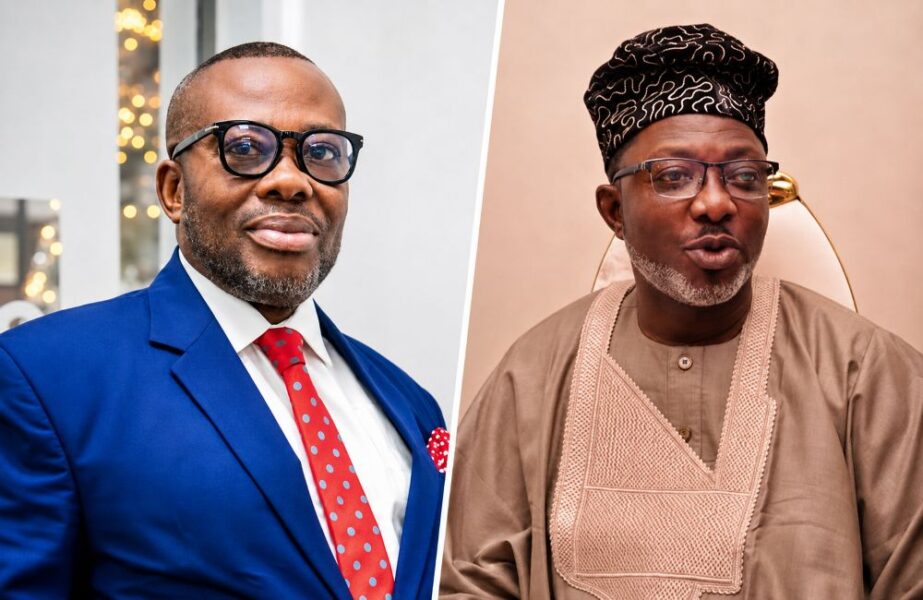

A Senior Advocate of Nigeria (SAN) and constitutional lawyer, Monday Ubani, has said President Bola Tinubu was under no constitutional obligation to submit his primary and secondary school certificates to the Independent National Electoral Commission (INEC), even as a factional Labour Party chieftain, Comrade Abayomi Arabambi, demanded explanations over alleged discrepancies in Peter Obi’s academic credentials.
The two spoke on Wednesday during separate interviews on Frontline, a current affairs programme on Eagle 102.5 FM, Ilese-Ijebu, amid renewed public debate following INEC’s publication of the educational credentials submitted by candidates for the 2027 presidential election.
Reacting to allegations by former Kogi West Senator Dino Melaye that Tinubu failed to submit his primary and secondary school certificates among his nomination documents, Ubani maintained that the Constitution does not compel presidential candidates to produce those certificates.
According to the senior lawyer, Section 131 of the Constitution only requires a candidate to demonstrate that they have been educated up to school certificate level or its equivalent.
“It is about the law, not about sentiment or bias,” Ubani said.
He explained that judicial authorities have consistently interpreted the constitutional provision to mean that candidates are not legally required to physically produce their primary or secondary school certificates.
“There is no constitutional compulsion to show certificates. It is only a moral issue and not a legal requirement,” he stated.
Ubani added that possession of a recognised university degree creates a legal presumption that the holder must have passed through the lower levels of education unless credible evidence is produced to prove otherwise.
While defending the constitutional position, he acknowledged that candidates seeking public office should voluntarily provide complete educational records in the interest of transparency.
“I agree that ordinarily, whoever is submitting credentials should show evidence of primary and secondary school certificates. These are moral issues. These are issues of transparency,” he said.
Ubani also defended INEC’s role, noting that the electoral body merely publishes candidates’ documents for public scrutiny and has no statutory responsibility to authenticate or verify them.
According to him, anyone alleging that false information has been submitted to INEC has the right to challenge such claims through the courts within the period stipulated by the Electoral Act.
The constitutional lawyer also commented on the controversy surrounding Nigeria Democratic Congress (NDC) presidential candidate Peter Obi’s academic records, saying discrepancies in names appearing on educational documents are not automatically evidence of wrongdoing but should be properly explained.
“It’s an issue now. Peter Obi has to give a reason why the change and all that. There must be a public document to that effect,” he said.
Also speaking on the programme, the factional National Vice Chairman (South West) of the Labour Party, Abayomi Arabambi, called on Obi to clear his name over what he described as inconsistencies in the names appearing on his academic credentials submitted to INEC.
The controversy centres on variations in the arrangement and presentation of Obi’s names across documents, including his University of Nigeria, Nsukka (UNN) degree certificate and National Youth Service Corps (NYSC) certificate.
Arabambi argued that anyone aspiring to occupy Nigeria’s highest office should first address questions surrounding their educational records.
“Obi should not think we are fools in Nigeria. Such a person should step aside to clear his name first. He should stop granting interviews,” he said.
He alleged that the identities reflected on some of the documents did not correspond with the name Peter Gregory Obi contained in the nomination documents submitted to INEC and insisted that any legal change of name should have been supported with an affidavit.
Arabambi disclosed that he had written to the University of Nigeria, WAEC and the National Youth Service Corps requesting verification of Obi’s academic records.
He added that petitions had also been submitted to the Economic and Financial Crimes Commission (EFCC) and the Nigeria Police Force and threatened legal action if the institutions failed to respond.
The LP chieftain further questioned the dates appearing on some of the certificates and alleged that some of the academic documents submitted by Obi did not belong to him.
However, he did not provide evidence during the interview to substantiate the allegation.
Peter Obi had not publicly responded to the allegations as of the time this report was filed.
The renewed debate has drawn attention to the constitutional qualifications for presidential candidates and the distinction between legal requirements and public expectations regarding transparency in the disclosure of academic credentials.