

The Independent National Electoral Commission (INEC) has assured residents of Ekiti State that all necessary arrangements have been concluded to ensure a credible, transparent and peaceful governorship election scheduled for June 20.
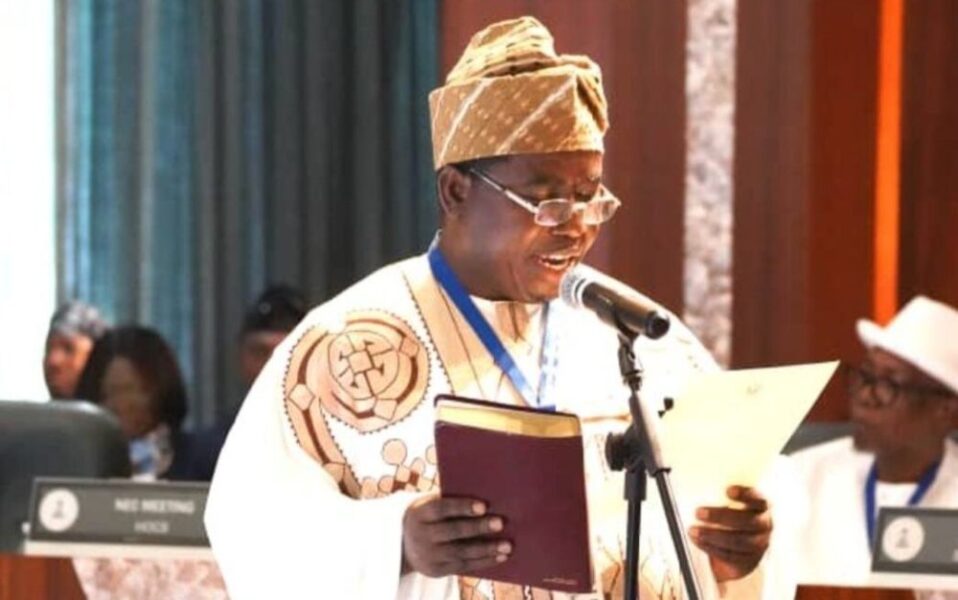
Speaking at a stakeholders’ meeting in Ado Ekiti on Thursday, INEC Chairman Prof. Joash Amupitan said the commission was fully prepared technologically, operationally and logistically to conduct an election that would meet the highest standards of credibility.
According to him, a total of 1,059,360 registered voters are eligible to participate in the election across the state’s 16 local government areas, 117 wards and 2,445 polling units.
Amupitan emphasised that the commission would strictly enforce voter accreditation procedures through the Bimodal Voter Accreditation System (BVAS), stressing that only voters with valid Permanent Voter Cards (PVCs) would be allowed to vote.
“To protect the integrity of the process, BVAS will remain the sole instrument for voter authentication and accreditation. Our legal standard remains clear: No PVC, No Accreditation and No Voting. There will be no exceptions,” he said.
The INEC chairman also disclosed that the commission had strengthened efforts to combat vote buying and other electoral offences through collaboration with the Economic and Financial Crimes Commission (EFCC) and the Independent Corrupt Practices and Other Related Offences Commission (ICPC).
He said electoral personnel had been directed to keep polling environments free from any form of financial inducement or unlawful interference.
“We are committed to defending the electoral process against both physical threats and the influence of vote trading. Polling units will be protected from any attempt to compromise voters through monetary inducements,” he stated.
Amupitan further assured stakeholders that all polling-unit results would be uploaded directly to the INEC Result Viewing Portal (IReV), enabling citizens and observers to monitor the outcome of the election in real time.
As part of efforts to promote inclusiveness, he said the commission would deploy assistive tools for voters with disabilities, including Braille ballot guides and magnifying glasses for persons with albinism and other visually impaired voters.
He noted that inclusivity remained a critical component of the commission’s electoral framework.
On security, the INEC chairman said the commission had worked closely with the Inter-Agency Consultative Committee on Election Security to identify and address potential flashpoints across the state.
According to him, security agencies have been briefed on areas vulnerable to political violence, cult-related activities and attempts to disrupt the voting process.
“Security personnel have been given clear operational directives to deal decisively with anyone seeking to undermine the peace of the election, regardless of their status,” he said.
Amupitan disclosed that the commission’s objective was to ensure that all 2,445 polling units commence accreditation and voting activities simultaneously by 8:30 a.m. on election day.
He added that logistics arrangements, including transportation of election materials and personnel, were being finalised to guarantee seamless deployment across the state.
Reaffirming INEC’s neutrality, the chairman told political parties, candidates and voters that the commission remained committed to its constitutional responsibility without favour to any contestant.
“We have no preferred candidate and no allegiance to any political interest. Our only commitment is to the law and the sovereign will of the Nigerian people,” he said.
Amupitan also charged journalists covering the election to uphold professional ethics by reporting accurately and objectively.
He urged media practitioners to avoid sensationalism, reject partisan influences and provide voters with factual information before, during and after the election.
The stakeholders’ meeting was attended by political party leaders, governorship candidates and their running mates, civil society organisations, election observers, media representatives and INEC officials.