
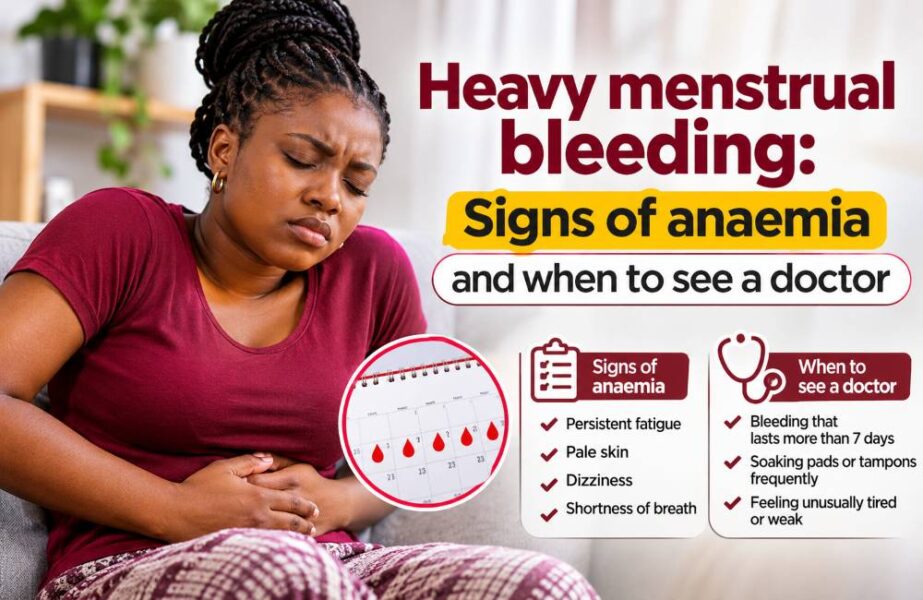

Menstrual bleeding that regularly soaks through sanitary pads or tampons within a few hours could be a sign of excessive blood loss, iron-deficiency anaemia or an underlying medical condition.
According to the United States Centers for Disease Control and Prevention (CDC), most women lose approximately two to three tablespoons of blood during a typical menstrual period.
However, women experiencing heavy menstrual bleeding may lose twice that amount.
Medically known as menorrhagia, heavy menstrual bleeding is characterised by unusually heavy or prolonged periods that can interfere with daily activities and potentially cause health complications.
How much menstrual bleeding is too much?
One major indication of heavy menstrual bleeding is the frequency with which sanitary products need to be changed.
According to the CDC, soaking through a pad or tampon in less than two hours, particularly when it happens repeatedly, may indicate excessive blood loss.
Other warning signs include passing blood clots approximately the size of a quarter or larger, using two pads simultaneously to prevent leakage and waking up during the night to change sanitary products.
Menstrual bleeding lasting longer than seven days is another warning sign.
Although measuring blood loss precisely at home can be difficult, menstrual cups can help women estimate the volume lost and provide more useful information during medical consultations.
How excessive bleeding can cause anaemia
Repeated or prolonged menstrual blood loss can deplete the body’s iron stores, eventually leading to iron-deficiency anaemia.
Iron is essential for producing haemoglobin, the protein in red blood cells responsible for transporting oxygen throughout the body.
Insufficient iron can reduce the production of healthy red blood cells and limit oxygen delivery to tissues.
Symptoms of anaemia include persistent tiredness, weakness, low energy, dizziness, pale skin and shortness of breath.
Women do not need to experience these symptoms before seeking medical attention.
Repeatedly experiencing unusually heavy periods is sufficient reason to consult a healthcare professional.
What causes heavy menstrual bleeding?
Several medical conditions can contribute to excessive menstrual bleeding.
Hormonal imbalances and irregular ovulation, which may occur during puberty and perimenopause, can disrupt the menstrual cycle and cause excessive growth of the uterine lining.
Polycystic ovary syndrome (PCOS) can also contribute to abnormal bleeding by interfering with regular ovulation.
Other possible causes include uterine fibroids and polyps, endometriosis, adenomyosis and pelvic inflammatory disease.
Thyroid, kidney and liver disorders may also contribute to abnormal menstrual bleeding.
Certain medications, particularly blood thinners, can increase menstrual blood loss.
Some intrauterine devices (IUDs), especially copper-containing devices, may also cause heavier periods.
Bleeding disorders such as von Willebrand disease are another possible cause.
Frequent nosebleeds, bleeding gums, unexplained bruising and prolonged bleeding from minor cuts may indicate an underlying clotting disorder.
In some cases, cancers affecting the uterus, cervix or reproductive tract can also cause abnormal bleeding.
When should you see a doctor?
Women who regularly experience periods lasting longer than seven days, soak through sanitary pads or tampons within two hours, or pass unusually large blood clots should seek medical assessment.
Medical attention is particularly important when heavy bleeding is accompanied by persistent fatigue, weakness, dizziness or shortness of breath, as these symptoms may indicate anaemia.
However, sudden and severe vaginal bleeding can be a medical emergency. Miscarriage and ectopic pregnancy can initially resemble unusually heavy periods.
An ectopic pregnancy occurs when a fertilised egg implants outside the uterus, usually in a fallopian tube, and can cause life-threatening internal bleeding if the tube ruptures.
Postpartum haemorrhage, which involves excessive bleeding following childbirth, can also occur up to 12 weeks after delivery.
Sudden heavy bleeding accompanied by a rapid heartbeat, pale or clammy skin, severe dizziness, fainting, blurred vision or significant weakness requires immediate emergency medical attention.
Heavy bleeding during a suspected or confirmed pregnancy should also be assessed urgently.
Diagnosis and treatment
Doctors diagnose heavy menstrual bleeding by reviewing a patient’s menstrual history, symptoms and medical background.
Investigations may include a complete blood count, iron tests, thyroid function tests, pregnancy tests and blood clotting tests.
Pelvic ultrasound may be recommended to examine the uterus and ovaries for fibroids, polyps or other abnormalities.
In selected cases, a biopsy may be necessary to investigate abnormal uterine tissue.
Treatment depends on the severity and underlying cause of the bleeding.
Options include hormonal contraceptives, hormone therapy and medications that reduce blood loss.
Doctors may prescribe iron supplements when iron deficiency is confirmed, and antibiotics when an infection is responsible.
Fibroids and polyps may require surgical removal. Severe bleeding can require hospital treatment involving medication, intravenous fluids or blood transfusion.
Surgery may be necessary in some life-threatening cases.
Why heavy periods should not be ignored
Heavy menstrual bleeding is more than a monthly inconvenience.
Repeated excessive blood loss can cause iron deficiency and anaemia, while the bleeding itself may indicate an underlying medical condition.
Monitoring menstrual cycles, recording bleeding duration, and noting how often sanitary products need changing can help doctors assess the problem.
Women should not assume that unusually heavy periods are normal or something they must endure.
Many causes of excessive menstrual bleeding can be treated, making early medical assessment important for protecting reproductive and general health.