
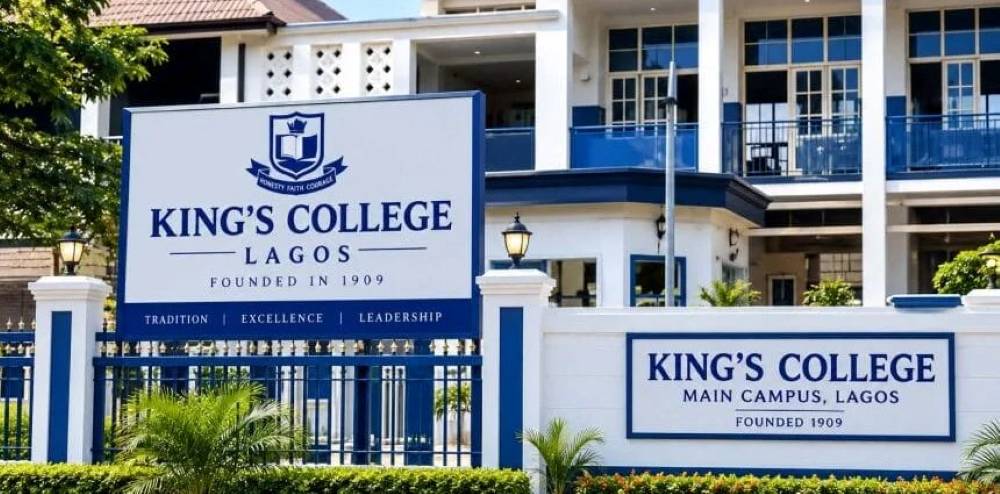

A fresh crisis is brewing over the Federal Government’s proposed concession of King’s College, Lagos, as organised labour intensifies opposition to the arrangement and threatens to disrupt activities across Federal Unity Colleges nationwide.
While the Nigeria Labour Congress (NLC) has warned that concessioning the prestigious school could open the door to the gradual transfer of other government-owned secondary schools to private or poorly equipped operators, the Association of Senior Civil Servants of Nigeria (ASCSN) has directed workers in Federal Unity Colleges to continue their industrial action.
ASCSN’s latest position came less than 48 hours after the Federal Government and organised labour agreed to suspend the dispute for two weeks and establish a seven-member committee to review the concession agreement.
The union’s zonal coordinators, after an emergency virtual meeting, said the government had failed to honour key understandings reached during a September 17 meeting with Education Minister Tunji Alausa.
They alleged that the broad-based committee agreed upon at the meeting had not been constituted and that documents relating to the proposed concession had not been released for scrutiny.
Consequently, the coordinators declared: “No reversal of King’s College Lagos concessioning, no resumption. The ongoing strike continues.”
They claimed the industrial action had recorded overwhelming compliance across the country and accused the Federal Ministry of Education of failing to follow due process and established industrial relations mechanisms.
The development has created conflicting signals over the reopening of the unity schools, with the federal government directing students and staff to resume while the union insists that its members should remain on strike.
NLC warns of wider consequences
Adding its voice to the opposition, NLC President Joe Ajaero said the labour centre could not support a policy that might eventually undermine the public character and accessibility of Nigeria’s Federal Unity Colleges.
Ajaero acknowledged that the proposed involvement of the King’s College Old Boys Association (KCOBA) was driven by concerns over years of neglect, inadequate funding, deteriorating facilities, corruption and indiscipline at the institution.
He said the old students’ desire to restore the college was understandable but argued that transferring responsibility for a federal secondary school to an outside entity could create a dangerous precedent.
According to him, once the King’s College arrangement succeeds, similar concessions could be pursued for other Federal Unity Colleges by organisations whose capacity to manage public secondary education may not be guaranteed.
Ajaero also raised concerns that such arrangements could eventually result in additional fees or tariffs, potentially making elite public institutions less accessible to children from average-income and poorer families.
His central argument was that responsibility for educating citizens remains a fundamental obligation of government and should not be gradually surrendered because of funding or management difficulties.
He argued that government had previously taken over schools from missionary organisations and should therefore continue to accept responsibility for their funding and maintenance.
“Rather than sell the schools through the back door,” Ajaero said, government should preserve competition among missionary, private and government schools while adequately funding public institutions.
He also called for the preservation of Federal Unity Colleges because of their contribution to national integration and quality education.
Government insists concession is not a sale
The federal government, however, has consistently rejected the description of the arrangement as a sale or privatisation.
Alausa has maintained that the government will retain legal ownership and oversight of King’s College, while the old boys’ association would take responsibility for financing, rehabilitating, modernising, operating and maintaining the institution under the proposed public-private partnership.
The minister has also said the government has no plan to extend the same management model to other Federal Unity Colleges.
According to him, the King’s College arrangement is an isolated intervention designed to address the institution’s infrastructure and management challenges.
KCOBA has similarly rejected claims that it is taking ownership of the school.
Its leadership says the association intends to preserve the federal character of the institution and keep admission open to students from across the country.
The association has also pledged not to increase school fees under the arrangement.
The federal government and labour unions had appeared to make progress towards resolving the dispute on September 17, when implementation of the concession was put on hold for two weeks and a joint review process was agreed.
ASCSN initially suspended its industrial action and directed workers to return to their duties.
The agreement was expected to create room for examination of the concession document and consideration of labour’s concerns.
That truce, however, has now come under strain.
ASCSN’s zonal coordinators say the government’s failure to establish the agreed committee and release the relevant documents has undermined the basis for the suspension.
The union has also rejected statements suggesting that its industrial action had been permanently suspended, insisting that only its recognised leadership can issue such directives.
The dispute has been further aggravated by the earlier deployment of police personnel to King’s College amid protests by workers and parents.
ASCSN accused security personnel of harassing protesters and arresting some individuals, allegations that have become another point of contention between the union and the ministry.
What began as a disagreement over the management of one historic Lagos school has therefore evolved into a wider argument over the role of government in public secondary education.
At the heart of the confrontation are competing questions over whether private or alumni-backed intervention can rescue poorly funded public institutions without weakening their public character, and whether government can retain meaningful responsibility for schools while outsourcing substantial aspects of their management.