
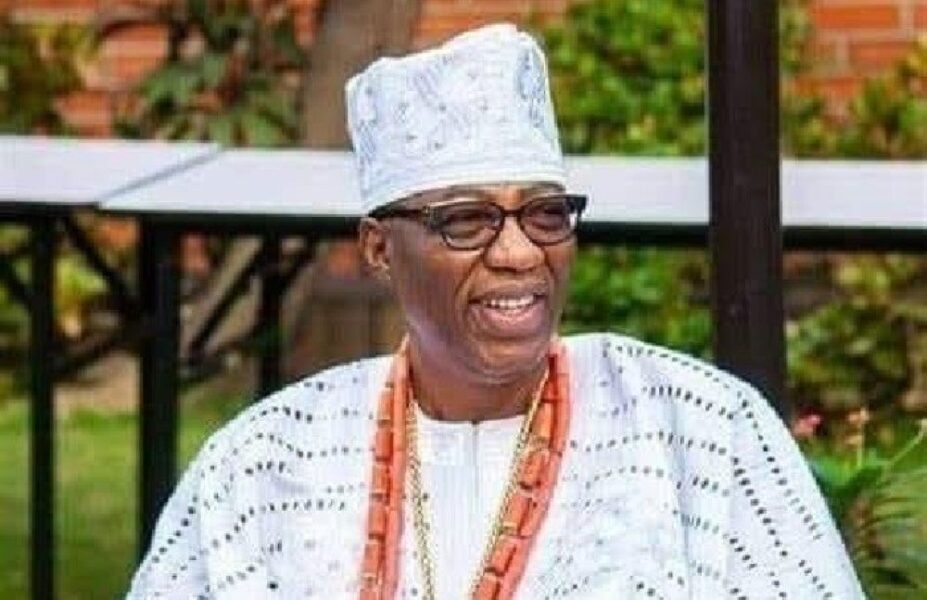

Former Ogun State Governor and Senator, Otunba Gbenga Daniel, has urged the Federal Government to undertake fundamental reforms of Nigeria’s economy and security architecture to create an environment where citizens and businesses can prosper.
Daniel made the call at the 10th anniversary lecture of FreedomOnline Newspapers held at the Sheraton Hotel, Lagos.
The event, themed “2027 Elections, Economy, Security and Nigeria’s Future,” attracted political leaders, public officials and other prominent Nigerians who examined the challenges confronting the country ahead of the 2027 general elections.
Daniel said Nigeria’s economic prospects were being undermined by insecurity, citing the persistent cases of banditry, kidnapping and other social vices across the country.
He noted that the abduction of more than 800 people in the country so far this year was an indication of the serious threat insecurity poses to economic development and national prosperity.
According to him, Nigeria has enormous resources and opportunities that can be harnessed for the benefit of its citizens, including its oil wealth, human capital, agricultural potential and growing digital economy.
The former governor also stressed the relationship between population and enterprise, while commending Lagos State Governor, Babajide Sanwo-Olu, for creating platforms which, he said, could enable Nigerians to pursue economic opportunities.
“The Nigeria we want tomorrow would be determined by the plan we make today,” Daniel said.
Also speaking, the Peoples Democratic Party (PDP) governorship candidate in Ogun State, Ladi Adebutu, expressed support for a capitalist economic system but argued that capitalism could not thrive without the rule of law and effective security.
Adebutu said weaknesses in Nigeria’s security architecture could undermine economic activities, adding that businesses could not prosper in an environment where citizens and investors were constantly exposed to threats.
“When we fail to grow our security architecture, the system fails and capitalism also fails,” he said.
He also linked electoral credibility to national security, arguing that disputed or rigged elections could trigger instability.
Adebutu called for transparent elections and greater tolerance of opposition voices, saying Nigerians should be able to freely express their views without fear.
“How safe is a Yorubaman in Kano?” he asked, stressing the need to build confidence and improve the conditions necessary for economic prosperity.
He further argued that insecurity had made doing business in Nigeria increasingly difficult, with some entrepreneurs engaging in economic activities merely to survive rather than to make meaningful profits.
Speaking on the security situation, Aare Ona Kakanfo of Yorubaland, Iba Gani Adams, criticised what he described as inadequate security across the country.
Adams appealed to Sanwo-Olu, who heads the South-West Governors’ Forum, to use the position to push for stronger regional security arrangements.
He said he had previously written twice to the forum seeking an opportunity to contribute to efforts to improve security in the region.
Adams renewed his call for the establishment of state police, describing it as an effective approach to tackling insecurity.
“I have been clamouring for this over 15 years ago,” he said, adding that state police remained “the best way to go in solving insecurity if we adopt it.”
He stressed that his position was not motivated solely by the 2027 elections but by the broader need to protect lives and property.
Sanwo-Olu, in his remarks, highlighted what he described as electoral, economic and security reforms undertaken by the All Progressives Congress-led Federal Government under the Renewed Hope Agenda.
He pointed to the recent governorship election in Osun State as evidence that an incumbent government could lose power when elections were allowed to proceed freely and fairly.
The Lagos governor commended the federal government for the reforms, which he said covered the electoral, economic and security sectors.
Former Minister of Information, Lai Mohammed, meanwhile, cautioned against treating the 2027 elections solely as a political contest.
Mohammed acknowledged the challenges confronting the federal government and urged stakeholders to approach the electoral process with a sense of responsibility.
He also argued that the media should recognise its role as an active participant in Nigeria’s political development rather than merely an observer.
According to him, journalists must exercise professionalism and avoid reckless reporting, particularly in an era when misinformation and fake news can aggravate existing social and political tensions.
He therefore urged the media to uphold professional standards and resist the spread of false information as the country approaches another election cycle.
The discussions at the anniversary lecture underscored the growing concerns over the relationship between security, economic development, credible elections and Nigeria’s long-term stability.