
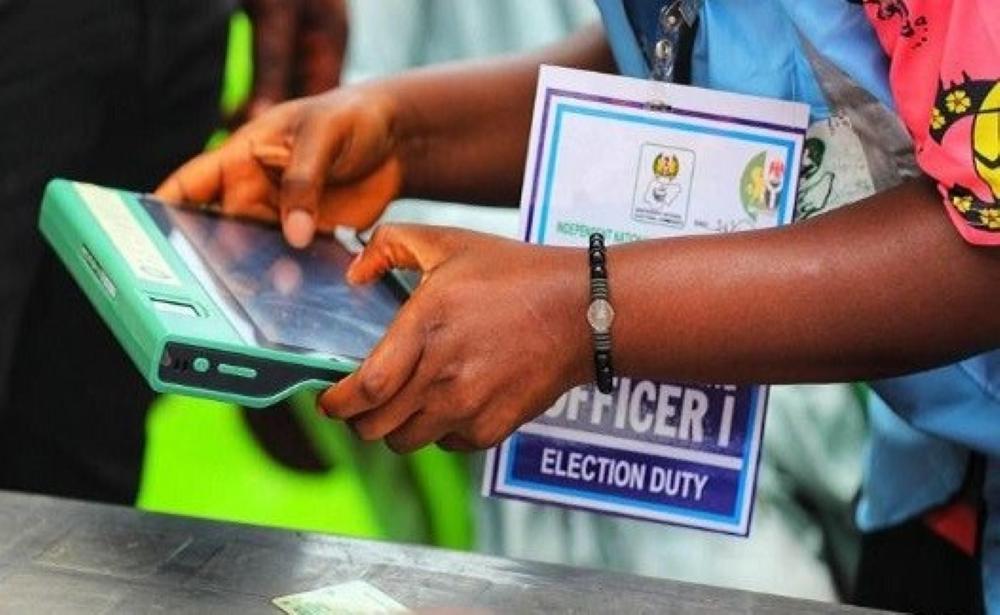

The Independent National Electoral Commission (INEC) on Saturday encountered technical difficulties during its mock voter accreditation exercise in Osun State after Bimodal Voter Accreditation System (BVAS) devices malfunctioned at several designated polling units, raising fresh concerns over preparations for the August 15 governorship election.
The exercise, organised across 12 local government areas spanning the state’s three senatorial districts, was designed to test the effectiveness of the commission’s accreditation process before election day.
Prospective voters arrived at the selected polling units with their Permanent Voter Cards (PVCs) for accreditation.
However, the exercise was disrupted shortly after it began when some BVAS machines reportedly failed to authenticate fingerprints, recognise facial features or read PVC information, forcing accreditation to stop at the affected centres.
INEC officials and technical personnel immediately moved to troubleshoot the faulty devices while voters waited for the exercise to resume.
Speaking on the development, the Public Relations Officer of the Osun State INEC office, Dayo Olurode, confirmed that engineers had been deployed to resolve the technical issues.
He, however, did not disclose the specific cause of the malfunction.
According to the commission, the mock accreditation exercise was intended to simulate election-day operations and assess the functionality of the BVAS devices before the governorship poll. No voting was scheduled during the exercise.
The technical hitch drew immediate reactions from election observers and civil society organisations, who warned that similar failures during the main election could undermine voter confidence and disrupt the electoral process.
The Coalition of Concerned Nigerian Citizens (CCNC) described the incident as a worrying signal about the commission’s preparedness.
In a statement signed by its spokesperson, Raufu Sodiq, the group said the purpose of a mock exercise was to reassure voters that election-day systems would function smoothly.
“A mock exercise is meant to inspire confidence. It is the dress rehearsal before the main performance. But what we witnessed today is not reassuring. It is alarming,” the statement read.
The coalition urged INEC to provide a detailed explanation of the malfunction, disclose the contingency measures it intends to deploy and ensure that all faulty BVAS devices are replaced before the governorship election.
The incident comes as INEC steps up preparations for what is expected to be one of Nigeria’s most closely watched off-cycle governorship elections.
The commission recently announced that the number of registered voters in Osun State had increased from 1,954,800 to 2,339,233 following the latest Continuous Voter Registration exercise, adding more than 384,000 new voters to the register.
INEC also disclosed that 322,822 newly registered voters, representing about 62 per cent, had collected their PVCs after the commission extended the collection period, adding that previously registered voters also continued collecting replacement and transferred voter cards.
To strengthen its operational readiness, INEC said it had configured all 3,763 BVAS devices required for the election and set aside an additional 1,328 machines as backup in case of emergencies.
The electoral body further stated that sensitive election materials had already been secured at the Central Bank of Nigeria branch in Osogbo, while the training of ad hoc staff commenced on July 31.
Despite these assurances, Saturday’s technical glitches are expected to heighten scrutiny of the commission’s preparations as political parties, election observers and voters assess INEC’s ability to conduct a credible and seamless governorship election.
The August 15 governorship election is expected to feature a keen contest among incumbent Governor Ademola Adeleke and candidate of the Accord party, Bola Oyebamiji of the All Progressives Congress (APC), and candidates representing 12 other political parties.