
The Nigerian Railway Corporation (NRC) has granted the Lagos State Government a permanent operating licence, making it the first state in Nigeria authorised to independently operate rail services and marking the end of the corporation’s 128-year status as the country’s sole railway operator.
The licence, issued through the Lagos Metropolitan Area Transport Authority (LAMATA), authorises Lagos to operate train services on the shared rail corridor under the existing Track Sharing Agreement while also paving the way for the state to manage additional rail systems in the future.
Speaking during the presentation ceremony, NRC Managing Director, Kayode Opeifa, described the development as a landmark moment in Nigeria’s railway sector, saying it reflects a shift from a monopolistic system to a more collaborative and regulated rail transport framework.
According to him, the corporation is not relinquishing its statutory responsibilities but is embracing international best practices that encourage multiple operators within a regulated railway environment.
“For 128 years, since 1898, the Nigerian Railway Corporation has remained the sole developer and operator of railway services across Nigeria,” he said. “Today, we formally change that narrative by expanding our horizons and encouraging multiple operators within a regulated rail system.”
He noted that the permanent licence represents another milestone in the longstanding partnership between the NRC and the Lagos State Government, which has focused on improving urban mobility through modern rail infrastructure.
Opeifa traced the collaboration to April 2012, when former President Goodluck Jonathan approved the transfer of two federal rail tracks to the Lagos State Government to facilitate the construction of the Lagos Rail Mass Transit Red Line.
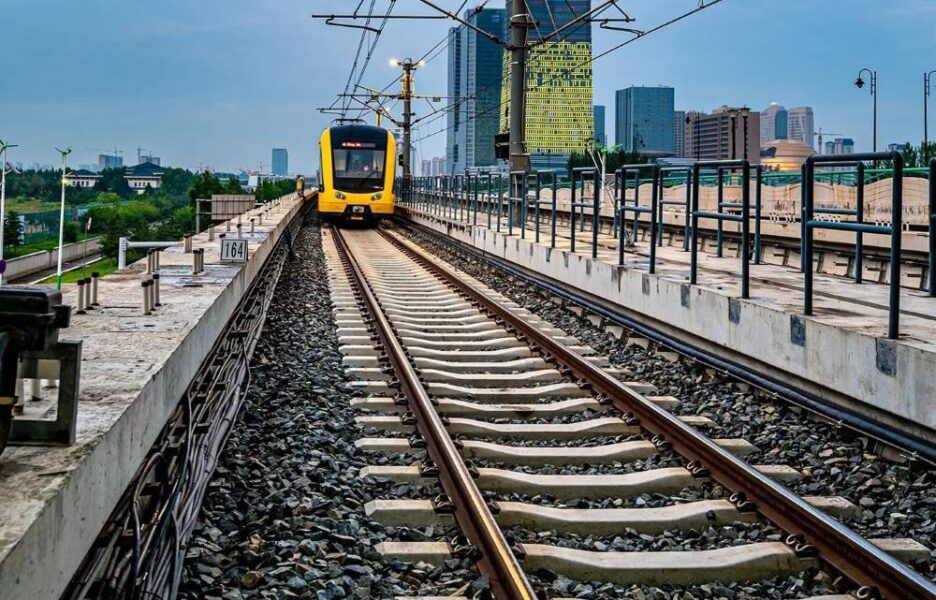
The Red Line commenced passenger operations on October 15, 2024, after it was inaugurated by President Bola Tinubu.
The NRC boss recalled that the corporation had initially issued Lagos a temporary operating licence to enable implementation of the Track Sharing Agreement while assessing the operational readiness and performance of the Red Line.
Following a successful evaluation, he said, the permanent licence now formally grants LAMATA the right to operate services on the shared corridor while assuming the responsibilities outlined in the agreement.
Opeifa added that the approval also empowers the Lagos State Government to operate other rail systems in line with global standards.
He praised Lagos for its sustained investment in rail infrastructure, rolling stock acquisition and public transportation, describing the state’s commitment as evidence of strong political leadership and long-term planning.
“The development of modern rail infrastructure requires foresight, substantial capital investment and sustained political will, all of which Lagos State has consistently demonstrated,” he said.
Opeifa further stressed that rail transport remains the backbone of efficient mass transit in major cities worldwide, noting that continued investment would improve passenger mobility, reduce congestion on roads and provide safer and environmentally sustainable transportation.
He urged other state governments to emulate Lagos by investing in railway infrastructure and services to complement the federal government’s efforts to revitalise Nigeria’s rail network.
According to him, expanding rail transportation across the country would reduce logistics costs, ease highway congestion, stimulate commercial activities and support national economic growth.
LAMATA’s managing director, Mrs. Abimbola Akinajo, described the permanent operating licence as the culmination of years of regulatory assessments and close collaboration with the NRC.
She said the approval would allow the agency to maximise operational windows on the Lagos Rail Mass Transit Red Line corridor, enabling more frequent train services and increased passenger capacity.
Akinajo revealed that obtaining the licence involved an extensive certification process during which LAMATA successfully met the corporation’s stringent operational requirements.
“It is only natural that Lagos would be the first. It wasn’t a walk in the park either; NRC put us through the full process,” she said.
She described the approval as a significant milestone for both Lagos and Nigeria’s rail industry, saying it would encourage greater participation by state governments while creating opportunities to develop a skilled railway workforce.
“Our vision is an integrated transport system for Lagos State, and this licence will help us achieve that,” she added.
Akinajo disclosed that LAMATA plans to expand Red Line operations to 24 daily services by the fourth quarter of 2026 following the delivery of additional rolling stock.
She said each new train set will carry at least 2,000 passengers per trip in each direction, a move expected to ease peak-hour congestion and improve service reliability.
The LAMATA chief also noted that the agency currently operates 94 daily trips on the Blue Line and reaffirmed its commitment to working with the NRC to further expand rail services and deliver faster, safer and more reliable transportation for Lagos residents.