
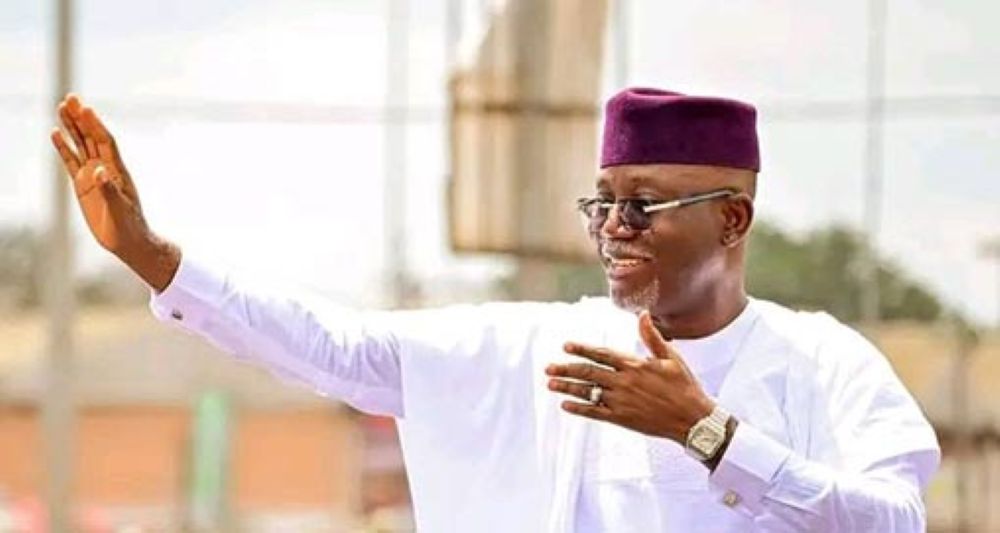

Ondo State Governor Lucky Aiyedatiwa has urged stakeholders to accelerate efforts to revive a dormant oil asset in the state, saying its reactivation could significantly enhance Nigeria’s crude oil production capacity.
The governor made the appeal on Monday in Akure while hosting a delegation from Sahara Energy Group.
Discussions at the meeting centred on plans to restore operations at an oil field that has remained inactive since 1998.
Nigeria is currently pursuing a target of increasing crude oil production from approximately 1.6 million barrels per day to 2 million barrels per day, and Aiyedatiwa said Ondo State is well-positioned to contribute more substantially to that goal if its oil resources are fully harnessed.
He noted that the state, currently ranked fifth among Nigeria’s oil-producing states, could improve its standing through renewed investment, modern infrastructure and improved operational efficiency.
Aiyedatiwa recalled a past fire incident at the dormant facility, questioning claims made at the time that there was no oil activity at the site.
“I remember when there was a fire outbreak in that very well, and then I was in NDDC as the representative of the state. They claimed then that there was no operation in that place, that there’s no oil and I was like, how can a place with no oil be on fire? Is it water that is bringing out the fire?” he said.
The governor stressed that tackling leakages, upgrading equipment and embracing digital technology would be essential to improving production and reducing inefficiencies.
According to him, better monitoring systems and automation could help eliminate human errors and strengthen accountability in the movement and measurement of petroleum products.
“If leakages are being blocked and the management of the production and the movement of products to the point where it can be calculated, the equipment, if they can digitalize it, remove some human errors and all that, maybe we’ll be able to hit that,” Aiyedatiwa added.
He also assured investors of the state government’s commitment to providing a conducive environment for operations, revealing that efforts are underway to dredge waterways leading to oil-producing communities to improve access and logistics.
Speaking earlier, Executive Director of Sahara Energy Group, Kola Adesina, described the oil asset as a “stranded” resource that has remained untapped for nearly three decades.
“The asset we have here, the last time it was operated was 1998. Of course, it simply means that’s a stranded asset that has not been unlocked fully to the advantage of the people,” Adesina said.
He explained that the company has commenced technical evaluations and integrity assessments to determine the current state of the facility and identify the requirements for restoring production.
Adesina expressed optimism that unlocking the asset would create economic benefits for the state and contribute to Nigeria’s broader energy production objectives.