
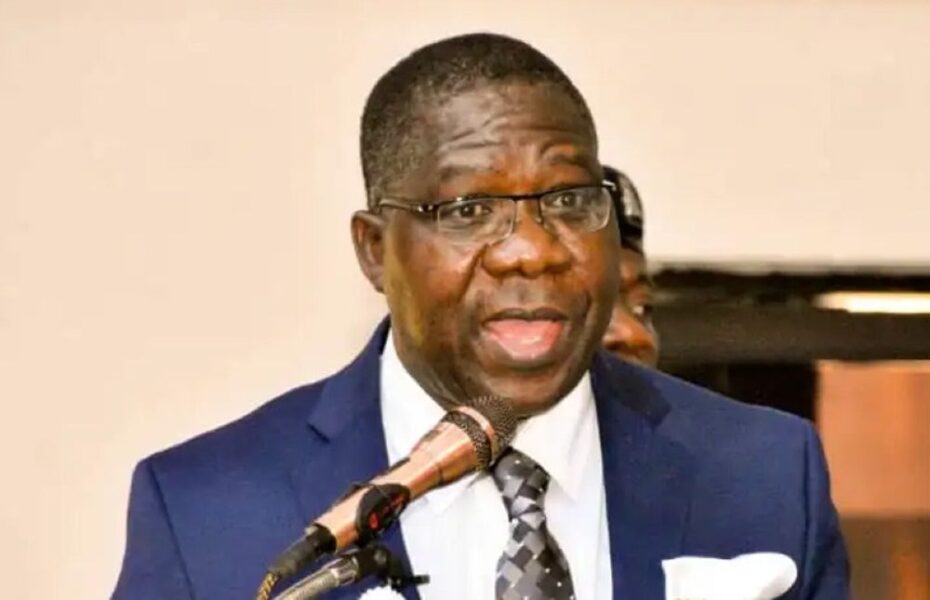

A proposal by Senate Leader Opeyemi Bamidele seeking a constitutional amendment to introduce a single six-year tenure for Nigeria’s president and state governors has continued to attract criticism, with public affairs analyst Bayo Ayanga and callers on Eagle 102.5 FM overwhelmingly rejecting the idea.
The proposal, unveiled by Bamidele during an interview with journalists in Abuja on Monday, seeks to replace the current two-term, four-year arrangement with a single non-renewable six-year tenure for elected executives at both federal and state levels.
According to the Senate Leader, the planned constitutional amendment bill would form part of the first legislative package he intends to sponsor when lawmakers reconvene for the 11th National Assembly after the 2027 general elections.
Bamidele argued that the existing arrangement encourages elected officials to begin re-election calculations shortly after assuming office, thereby reducing the time available for effective governance.
“If you know you are there for six years, only one tenure, you put in your best from day one. You know this is the only chance that you have,” he stated.
He maintained that the proposed reform would reduce political distractions associated with second-term ambitions and allow leaders to focus entirely on governance and policy implementation.
The proposal is also part of a broader reform agenda that includes plans to compel the Revenue Mobilization Allocation and Fiscal Commission to publicly disclose the salaries and allowances of lawmakers and other public office holders.
However, speaking during the Frontline programme on Eagle 102.5 FM in Ilese-Ijebu, Ogun State, public affairs analyst Bayo Ayanga dismissed suggestions that the idea was innovative, recalling that former President Goodluck Jonathan had canvassed a similar proposal years ago.
Ayanga, who chairs the Ijebu North East Forum, said Jonathan had proposed a single five-year tenure around 2012 or 2013, arguing then that second-term ambitions often heightened political tension and distracted office holders from governance.
“What he said is not new. We remember very well in 2013, I suppose, 2012 or 2013, the then President, Goodluck Ebele Jonathan came up with this idea, of a five-year single tenure in office,” Ayanga said during the programme.
He noted that Jonathan’s position at the time was that politicians seeking re-election often plunged the political environment into unnecessary turmoil.
Despite that historical reference, callers who participated in the programme largely opposed the latest proposal, insisting that Nigeria’s governance problems are rooted more in accountability failures and poor leadership than in tenure duration.
One caller, AbdulWasiu from Ago-Iwoye, described the proposal as a diversion from pressing national concerns such as insecurity and economic hardship.
According to him, four years remain sufficient for committed leaders to make meaningful impacts in office.
He cited former governors, including Olabisi Onabanjo, Lateef Jakande, Bola Ige and Ambrose Alli as examples of leaders who delivered lasting legacies within relatively short periods.
“For me, it’s just to divert the attention of Nigeria. Now we are yearning for good governance,” he said, adding that lawmakers should focus more on insecurity and citizens’ welfare.
Another contributor, Prince Suleiman Hassan, also faulted the proposal, arguing that Nigerians expected lawmakers to prioritise issues directly affecting citizens rather than constitutional debates over tenure length.
Hassan called instead for stronger social welfare policies and legislative interventions that would improve living conditions for ordinary Nigerians and provide support for vulnerable groups, especially elderly citizens.
“It is just a distraction. It’s a big statement. Making us forget what we are really expecting them to say,” he stated.
Oscar, another caller from Ijebu-Ode, blamed Nigeria’s democratic shortcomings on what he described as the growing disconnect between political leaders and the citizens they govern.
According to him, many public policies fail because political office holders do not personally experience the consequences of the economic realities faced by ordinary Nigerians.
He argued that no tenure structure would automatically improve governance unless leaders were held accountable for their actions while in office.
“Whether you give them ten years or one single tenure, what they are going to do is just to make it so that any office in this country should be a hands-able for,” he said.
Oscar further stressed that the widening gap between leaders and citizens remains one of the major obstacles to effective democracy and development in the country.
The growing opposition reflects broader public scepticism over repeated constitutional amendment debates, with many Nigerians insisting that transparency, accountability and improved governance should take precedence over discussions about tenure elongation.
Although Bamidele acknowledged that his proposal represents a personal conviction that may face resistance, he insisted that democratic laws and institutions must continue to evolve with changing realities.
The idea of a single tenure system has previously received backing from notable political figures, including Seyi Makinde, Chukwuma Soludo and former Vice President Atiku Abubakar.
However, previous legislative attempts to introduce similar constitutional amendments reportedly failed during second reading stages in 2019 and 2020.