
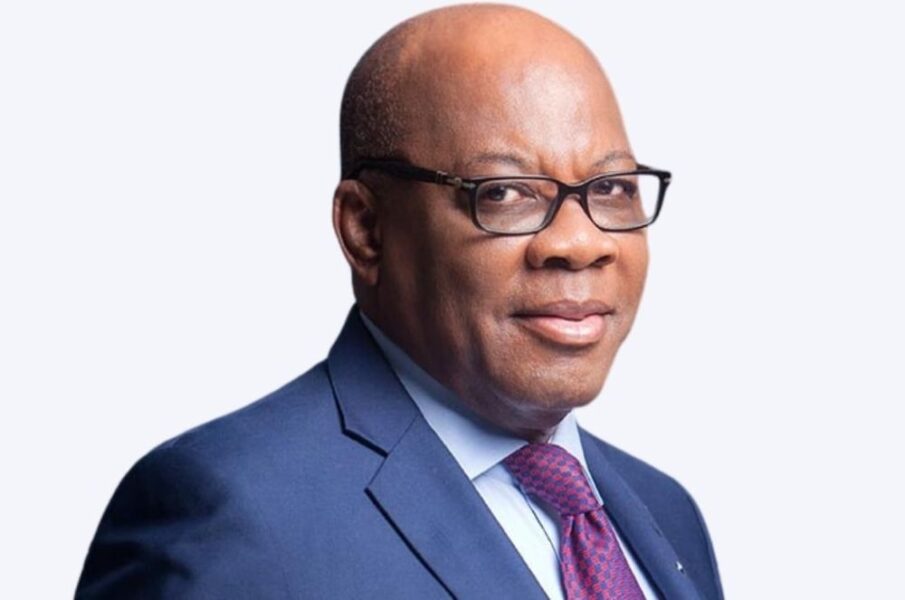
Senior Advocate of Nigeria and former President of the Nigerian Bar Association (NBA), Olisa Agbakoba, has raised concerns over what he described as massive structural leakages in Nigeria’s public finance system, warning that the country could be losing as much as ₦20 trillion annually through institutional inefficiencies, oil sector manipulations, and weak enforcement of constitutional revenue provisions.
Speaking on Frontline, a current affairs programme on Eagle 102.5 FM in Ilese-Ijebu, Ogun State, the public policy and legal reform expert argued that Nigeria’s persistent reliance on borrowing, despite its enormous revenue potential, reflects deep-rooted failures in fiscal management and revenue administration.
He referenced Section 162 of the Nigerian Constitution, which establishes the Federation Account and mandates that all revenues collected by the federal government be paid into the account without deductions.
According to him, the constitutional provision is clear, but implementation has been undermined by parallel financial arrangements operated by key institutions.
Agbakoba specifically accused the Nigerian National Petroleum Company Limited (NNPCL) of playing a major role in revenue leakages within the oil and gas sector, alleging that deduction practices and opaque financial arrangements have significantly reduced inflows into the Federation Account.
According to him, the scale of the problem partly informed President Bola Tinubu’s decision to dissolve the former NNPC board led by Mele Kyari.
He also referenced ongoing anti-corruption investigations involving some officials of the national oil company.
The senior lawyer questioned why Nigeria continues to accumulate debt despite possessing sufficient revenue sources to meet national obligations if properly managed.
He compared the situation to a household borrowing money despite having enough funds in its bank account.
Nigeria’s public debt has continued to rise in recent years, with concerns mounting over debt servicing costs and shrinking fiscal space for infrastructure and social development projects.
Agbakoba further criticised what he described as unconventional crude oil financing arrangements, including forward crude oil sales, in which future oil production is pledged in exchange for immediate cash advances.
He mentioned projects such as Project Gazelle, Project Yield, Project Leopard, and Eagle Export Funding as examples of financing structures tied to future crude revenues.
According to the human rights and public interest law expert, such arrangements mortgage Nigeria’s future earnings and weaken long-term fiscal sustainability.
He also raised concerns over repeated spending on refinery rehabilitation projects in Port Harcourt, Warri, and Kaduna despite limited operational output, arguing that it was economically irrational for Nigeria to continue exporting crude oil while importing refined petroleum products.
Agbakoba credited the emergence of the Dangote Refinery with easing pressure on the downstream petroleum sector, stating that without the facility, the country would still be heavily dependent on imported fuel.
The maritime law and blue economy expert maintained that revenue leakages extend beyond oil proceeds to include petroleum profit tax, royalties, licensing fees, gas penalties, stamp duties, solid minerals revenues, and company income taxes.
He estimated that Nigeria could be operating at nearly 60 per cent below its actual revenue potential due to systemic weaknesses in fiscal governance.
Agbakoba cited international assessments, including estimates by the World Bank, which he said support concerns over revenue inefficiency and weak remittances into the Federation Account.
He warned that debt servicing obligations now consume a significant portion of government earnings, leaving limited resources for infrastructure, salaries, security, healthcare, and other constitutional responsibilities.
On economic reforms introduced by the Tinubu administration, Agbakoba said the removal of fuel subsidy and exchange rate reforms were necessary policy decisions but criticised the absence of adequate mitigation measures.
He questioned why proceeds from subsidy removal were not channelled into a dedicated infrastructure development fund for projects such as roads, schools, bridges, and public utilities.
Instead, he argued, the funds are largely distributed to state governments without strict accountability mechanisms.
The former NBA president also criticised the political class for prioritising preparations for the 2027 elections over governance and fiscal reforms.
According to him, political debates ahead of the next election cycle should focus on how to plug revenue leakages and improve public finance management.
The human rights lawyer maintained that Nigeria’s economic crisis is fundamentally linked to institutional failures rather than resource scarcity.
He warned that without urgent reforms in revenue collection, oversight, and expenditure management, the country would remain trapped in cycles of borrowing, inefficiency, and underdevelopment despite its vast economic resources.