

President of the Senate, Godswill Akpabio, on Wednesday reaffirmed the commitment of the National Assembly to strengthening food security through agricultural education, innovation and strategic collaboration across Nigeria.
He described agriculture as a critical pillar for national stability, economic growth and sustainable development, stressing that increased investment in research, technology and human capital development remained essential for unlocking the country’s agricultural potential.
The Senate President made the remarks at the maiden National Legislative Summit and Expo on Agricultural Colleges and Institutions for the South West Zone held at the International Institute of Tropical Agriculture (IITA) in Ibadan.
The four-day summit was organised by the Senate Committee on Agricultural Colleges and Institutions chaired by Senator Sharafadeen Alli.
Speaking on the theme, “Unfolding the Potentials of Agricultural Colleges and Institutions Through Collaboration and Innovation to Enhance Food Security and Job Creation,” Akpabio, who was represented by Senate Deputy Majority Leader, Oyelola Ashiru, said agriculture remains central to Nigeria’s prosperity, peace and economic independence.
“Agriculture is life. It is civilisation. It is security. Nations that invest in agriculture invest in stability, employment, peace and sovereignty,” he said.
He noted that Nigeria possesses enormous agricultural advantages, including vast arable land, favourable climate conditions, diverse ecological zones and a growing youthful population capable of driving innovation within the sector.
According to him, agricultural colleges and research institutions remain strategic platforms for boosting productivity, strengthening food systems and driving technological advancement in farming.
Akpabio said with stronger institutional support, the institutions could help advance climate-smart agriculture, improve seed technology, strengthen food processing and value chains, reduce post-harvest losses and generate employment opportunities for millions of Nigerians.
He emphasised the need for stronger collaboration among government agencies, researchers, development partners, investors, academia and farmers to achieve meaningful agricultural transformation.
“We must dismantle institutional silos and build bridges between research and practice, between policy and implementation, as well as between innovation and accessibility,” he stated.
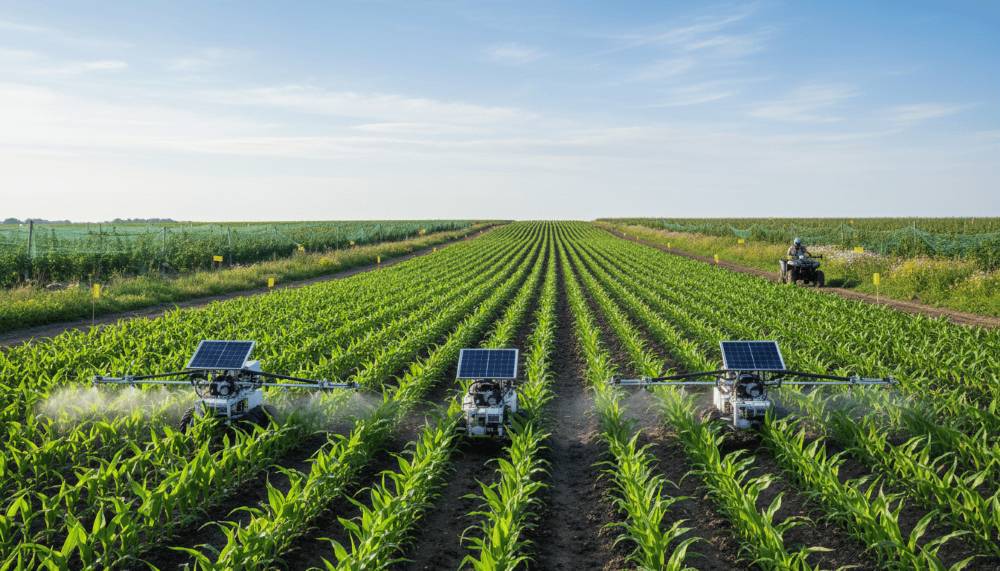
The Senate President also highlighted the growing role of innovation and technology in modern agriculture, noting that the future of farming would increasingly depend on mechanisation, biotechnology, artificial intelligence, digital systems, irrigation technology and climate adaptation strategies.
He urged Nigerian youths to embrace agriculture as a viable sector for entrepreneurship, innovation and wealth creation.
“The future farmer today may operate drones, use artificial intelligence for crop analysis, deploy digital irrigation systems, manage greenhouse technology and trade agricultural products globally from a smartphone,” he added.
Akpabio assured stakeholders that the National Assembly would continue to support policies and legislation aimed at strengthening agricultural education, research, financing and commercialisation.
He stressed that food security remained essential to national peace, productivity and social stability, adding that Nigeria must move beyond subsistence farming toward agro-processing, competitiveness and export-oriented agriculture capable of positioning the country as a leading agricultural hub in Africa.
Earlier in his remarks, Chairman of the Senate Committee on Agricultural Colleges and Institutions, Sen. Alli, described the summit as a landmark initiative designed to reposition agricultural institutions as key drivers of food security, youth empowerment and sustainable development.
Alli said the gathering brought together lawmakers, policymakers, researchers, development partners and investors across the agricultural value chain to explore practical reforms and strategic partnerships for revitalising agricultural colleges nationwide.
In his keynote address, Minister of State for Agriculture and Food Security, Aliyu Abdullahi, represented by Executive Secretary of the Agricultural Research Council of Nigeria, Adamu Abubakar, urged participants to ensure that discussions at the summit translate into practical policies capable of strengthening agricultural institutions and improving food production systems across the country.
Also speaking, the Director-General of IITA, Simeon Ehui, represented by the institute’s Deputy Director-General for Partnership, Abdullahi Tahiru, said the summit marked a significant step toward strengthening collaboration in agricultural research, food security and job creation.
He reaffirmed the institute’s commitment to promoting agricultural innovation, climate-smart farming and sustainable food systems through research, partnerships and capacity building across Africa.