
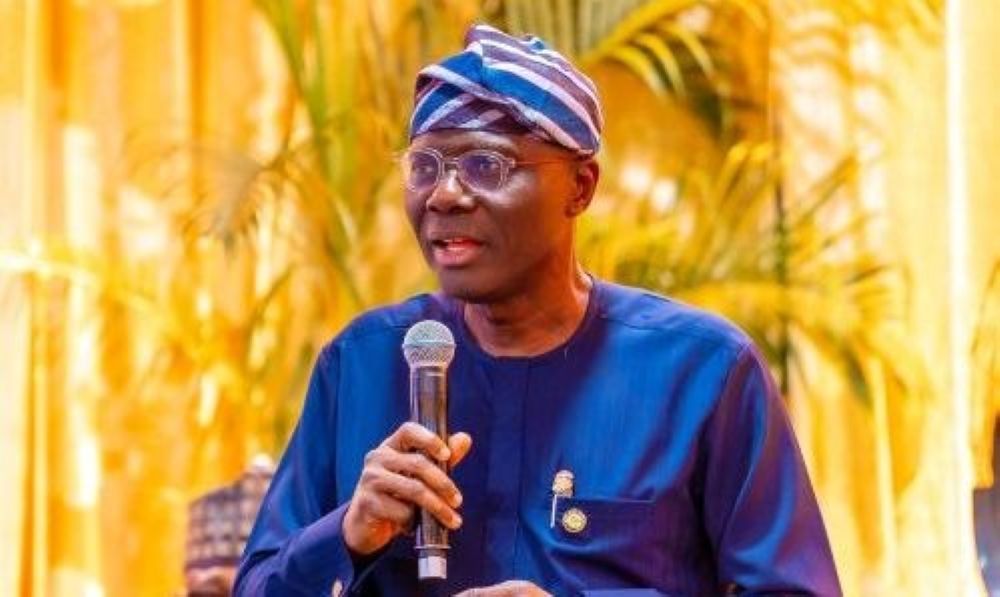

Lagos State Governor Babajide Sanwo-Olu has urged the international community to accord greater recognition to the role of cities in driving economic growth and social transformation, describing Lagos as a “living testament to African possibility”.
Sanwo-Olu made the assertion on Friday while delivering a lecture at the closing ceremony of Africa Week 2026 organised by King’s College London at the African Leadership Centre in the United Kingdom.
According to a statement issued by his Special Adviser on Media and Publicity, Gboyega Akosile, the governor spoke on the topic “Exercising Agency beyond the Nation-State: Debating Change and Transformation in the Global City, Lagos”.
Addressing an audience of scholars, policymakers and students, Sanwo-Olu noted that global development conversations have historically centred on national governments, often overlooking the increasingly influential role of cities in shaping economic productivity, governance and innovation.
He observed that Lagos, despite occupying a relatively small portion of Nigeria’s landmass, has evolved into one of Africa’s most economically significant urban centres.
The governor said the state now boasts the continent’s second-largest city economy with an estimated Gross Domestic Product of about $259 billion based on purchasing power parity.
He added that Lagos remains Nigeria’s foremost commercial gateway and a major hub for capital, enterprise, talent and innovation.
Sanwo-Olu argued that the development trajectory of Lagos demonstrates how strategic governance at the sub-national level can produce outcomes that resonate far beyond national borders.
Reflecting on his administration’s development philosophy since assuming office in 2019, the governor said Lagos must be governed not as a problem to be managed but as an opportunity to be harnessed.
He explained that this approach informed the THEMES+ agenda of his administration, which focuses on transport and traffic management, health and environment, education and technology, megacity development, environment and tourism, security and governance, as well as social inclusion, gender equality and youth development.
According to him, the framework became crucial as Lagos, like many global cities, has faced overlapping challenges in recent years, including the COVID-19 pandemic, rapid population growth, climate risks and a significant infrastructure financing gap.
Sanwo-Olu emphasised that improving mobility has been central to the government’s efforts to unlock productivity and enhance quality of life in the state.
He highlighted major transportation projects undertaken by the administration, including the commencement of passenger operations on the Blue Line rail and the inauguration of the Red Line as a second intra-city rail corridor.
These initiatives, he said, form part of a broader multimodal transport system that also includes improvements in road infrastructure, bus reforms and water transport.
The governor added that Lagos has expanded digital access for commuters through an integrated transport payment system aimed at improving efficiency across the transport network.
Beyond transportation, Sanwo-Olu said his administration has prioritised rebuilding public trust in governance through sustained investments in infrastructure, security, housing and emergency response services.
He disclosed that the state government has delivered more than 3,000 affordable housing units in recent years, deployed 250 patrol vehicles to strengthen security operations and procured 62 fire trucks to boost emergency response capacity.
Other initiatives, he said, include investments in education infrastructure and food security programmes, particularly the development of the Imota Rice Mill and broader logistics planning to support the state’s food systems.
Sanwo-Olu also pointed to Lagos’ expanding economic capacity, noting that the state’s ₦4.44 trillion budget for 2026 reflects its ambition to sustain large-scale investments in infrastructure, social services and economic competitiveness.
According to him, Lagos continues to account for a significant share of Nigeria’s capital importation and internally generated revenue, reinforcing its status as a major economic engine for the country.
He stressed that the city’s economic strength should be viewed as complementary to national development rather than competitive with it.
“A strong Lagos strengthens Nigeria, just as strong cities strengthen nations everywhere,” he said, adding that urban productivity remains one of the most critical foundations of national progress.
The governor further highlighted the creative economy as an emerging pillar of Lagos’ development strategy, noting the global impact of the city’s music, film, fashion and digital content industries.
Sanwo-Olu said Nollywood’s scale, the growing number of production companies in Lagos, and the international reach of Nigerian musicians and fashion brands demonstrate how creativity can generate employment, attract investment and reshape global perceptions of Africa.
He also warned that climate change poses a significant threat to coastal cities such as Lagos and must be addressed as a core development priority.
The governor cited rising sea levels, flooding risks and rapid urbanisation as factors that require urgent and coordinated responses.
Sanwo-Olu noted that the Lagos Climate Adaptation and Resilience Plan launched in 2024, alongside climate investment frameworks and green bond initiatives, are part of efforts to promote climate-resilient infrastructure and sustainable urban development.
He said ongoing interventions in drainage systems, waste management, clean mobility, solar integration and climate-smart infrastructure are critical to safeguarding the city’s future.
While emphasising the growing influence of cities in global development, Sanwo-Olu maintained that this does not diminish the importance of national governments but rather underscores the need for collaborative leadership across multiple levels.
According to him, effective governance in the modern era requires alignment among national institutions, cities, communities, academic institutions, investors and development partners.
He added that Lagos has actively pursued such collaboration through partnerships with the private sector, multilateral organisations and academic institutions in order to mobilise resources, generate ideas and drive innovation.
Sanwo-Olu concluded that the future of public leadership will depend on how well governments adapt, listen and learn in an increasingly complex global environment.