

The Lagos State Government has reiterated its resolve to deepen infrastructure delivery, strengthen public institutions, expand climate-adaptive investments, and ensure that rapid urban growth translates into measurable improvements in residents’ quality of life.
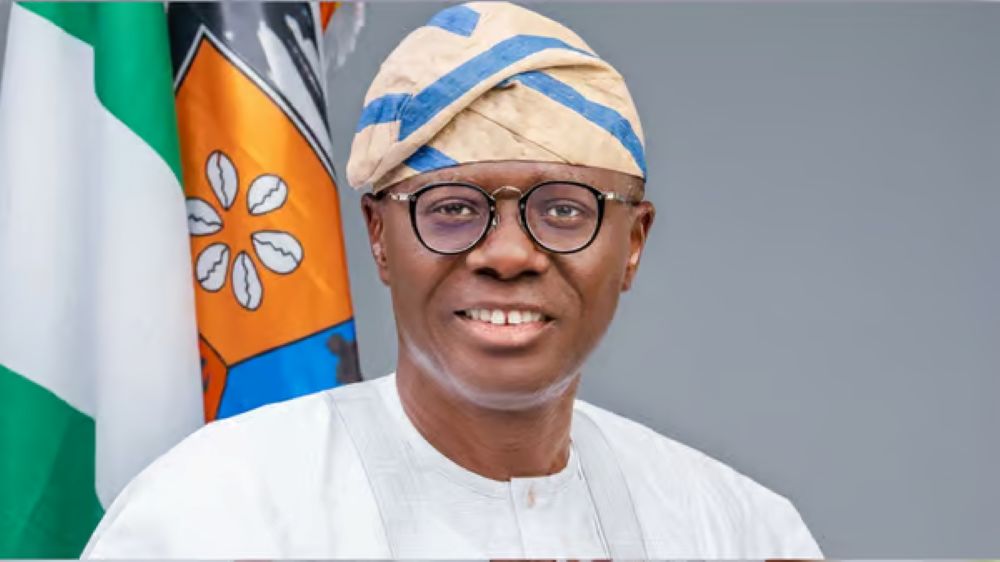
Governor Babajide Sanwo-Olu made the pledge while addressing participants at the 2026 Nigeria Construction and Real Estate Outlook organised by the Royal Institution of Chartered Surveyors (RICS) in Lagos. The event was themed “Infrastructure Development: A Catalyst for Real Estate, Construction and Economic Growth.”
Represented by the Lagos State Commissioner for Housing, Moruf Akinderu-Fatai, Sanwo-Olu stressed that infrastructure is central to economic expansion and social inclusion, describing it as the “architecture of growth” that determines how cities expand, where value is created, and whether development is resilient or fragile.
He reaffirmed the state’s commitment to maintaining a stable policy environment, improving data-driven planning systems, supporting innovation in construction methods, and broadening collaboration with the private sector and professional bodies.
According to the governor, institutions such as the RICS play a critical role in shaping sustainable development outcomes.
He noted that chartered surveyors and built-environment professionals serve as custodians of value by safeguarding transparency, ensuring accountability, and aligning development with long-term economic and social objectives.
Sanwo-Olu emphasised that Lagos, Africa’s largest city and Nigeria’s economic nerve centre, absorbs thousands of new residents daily, placing immense pressure on existing infrastructure.
However, he said this also presents significant opportunity if infrastructure planning stays ahead of demand.
Drawing from the state’s experience, the governor said decisive public investment in infrastructure has consistently boosted market confidence.
He highlighted that Lagos has deliberately pursued infrastructure as a long-term investment strategy rather than a short-term political exercise.
Integrated transport systems, including the Lagos Rail Mass Transit network, he explained, are reshaping land-use patterns, unlocking new real estate corridors, reducing congestion costs, and supporting transit-oriented development.
Road and bridge projects, he added, are designed not only for mobility but also to enhance economic connectivity by opening up new residential, commercial, and industrial districts.
Looking ahead, Sanwo-Olu described the outlook for Nigeria’s construction and real estate sectors toward 2026 as “cautiously optimistic,” stressing that success will favour stakeholders who plan deliberately and consistently.
He identified emerging opportunities in transit-oriented development, urban regeneration, affordable housing, logistics and industrial parks, and climate-resilient infrastructure.
He warned, however, that such opportunities cannot be fully realised in an environment of policy volatility or fragmented planning, noting that infrastructure success requires persistence, predictability, and professional integrity.
Reforms in land administration, planning approvals, and project delivery frameworks, he said, have been instrumental in reducing uncertainty and improving project viability.
Through structured public-private partnerships, the governor maintained, Lagos has demonstrated that infrastructure delivery can be accelerated while appropriately allocating risk and preserving public value.
As Nigeria navigates its urban and economic transition, Sanwo-Olu assured that Lagos would continue to lead by example through bold planning, responsible construction, and strategic partnerships to secure sustainable prosperity.
Earlier, Chairman of the RICS Nigeria Group, Tayo Odunsi, underscored the strong link between construction, real estate, and economic development, identifying conviction, access to patient capital, and effective project execution as critical success factors for the sector.
He described the RICS as a global benchmark body with over 150 years of experience in defining professionalism, integrity, and value creation in the built environment.