

Nigeria’s Presidential Fiscal Policy and Tax Reforms Committee has issued a comprehensive rebuttal to a recent critique by KPMG, firmly defending the country’s newly enacted tax laws as deliberate, growth-oriented policy choices rather than technical errors or legislative oversights.
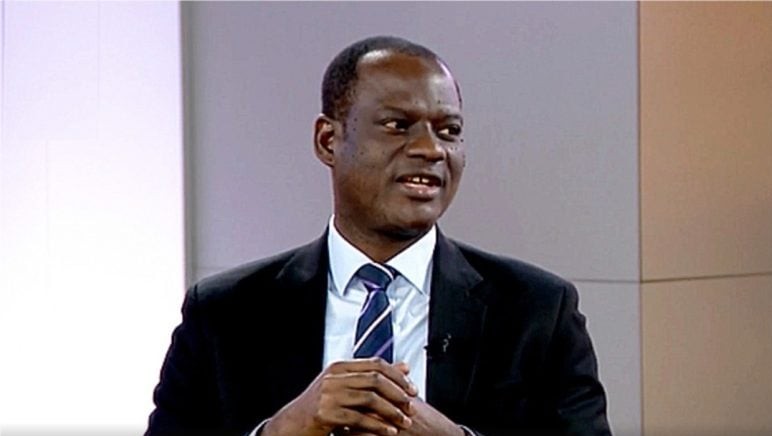
In a detailed response titled “Observations on Nigeria’s New Tax Laws,” posted Saturday on the official X handle of its chairman, Taiwo Oyedele, the Committee acknowledged that some of KPMG’s observations, particularly those relating to clerical issues and implementation risks, were useful. However, it rejected what it described as the consulting firm’s broader mischaracterisation of intentional reforms and the tendency to present opinion and preference as objective fact.
“We welcome all perspectives that contribute to a shared understanding and successful implementation of the new tax laws,” the Committee said. “However, the majority of the publication reflected a misunderstanding of policy intent, a mischaracterisation of deliberate policy choices, and, in several instances, the presentation of opinion as fact.”
Policy Disagreement Versus Legislative Error
According to the Committee, many of the issues described by KPMG as “errors,” “gaps,” or “omissions” fell into five categories: incorrect conclusions, failure to appreciate the reform context, overlooked objectives, preference for alternative outcomes, and minor clerical matters already identified internally.
While affirming the right of professional firms to hold divergent views, the Committee stressed that disagreement with policy direction should not be conflated with technical defects in the law. It noted that other advisers who engaged government through direct consultations offered more constructive input grounded in dialogue rather than post-enactment critique.
Capital Markets and Investor Confidence
A major point of contention was KPMG’s suggestion that the revised chargeable gains regime could prompt a sell-off in the equity market. The Committee dismissed this claim, clarifying that the new framework does not impose a blanket 30 per cent tax on share disposals.
Instead, the law introduces a graduated rate ranging from zero to a maximum of 30 per cent, with a planned reduction to 25 per cent. It further disclosed that roughly 99 per cent of investors qualify for unconditional exemptions, while others are eligible for reliefs tied to reinvestment.
Pointing to current performance on the Nigerian Exchange Group, the Committee said market activity already contradicts fears of capital flight. “The market’s performance, now at historic highs with increased investment flows, shows that investors understand these reforms will strengthen corporate fundamentals,” it said, describing sell-off predictions as unsubstantiated.
Commencement Dates and Transition Realities
Responding to KPMG’s argument that the new laws should have commenced strictly at the start of an accounting year, the Committee said the proposal ignored the complexity of wholesale tax reform. According to the Committee, comprehensive changes inevitably cut across accounting periods, audits, credits, deductions, and penalties.
“KPMG’s proposal is therefore not a universal ‘gold standard’ applicable to all reforms,” it stated.
Global Alignment and Closing Loopholes
Defending provisions on indirect transfer of shares, the Committee said the reforms align Nigeria with global best practices and Base Erosion and Profit Shifting (BEPS) principles, aimed at sealing long-standing loopholes exploited by multinational corporations.
“The objective is to block a long-exploited loophole, not to undermine competitiveness,” it said, dismissing claims of potential economic destabilisation as disingenuous.
On value-added tax, the Committee reiterated that insurance premiums are not taxable supplies under Nigerian law, as they relate to risk transfer rather than goods or services. It argued that calls for an explicit VAT exemption were unnecessary and academic.
Legal Drafting, Institutions and Dividends
The Committee also faulted what it described as KPMG’s misunderstanding of legislative drafting, including concerns over the definition of taxable persons, the composition of the Joint Revenue Board, and dividend treatment.
It explained that modern statutes rely on comprehensive definitions applicable across sections, and that the Joint Revenue Board’s composition, limited to revenue authorities, was intentional and consistent with existing institutional design.
On dividends, the Committee accused KPMG of conflating foreign-controlled companies with foreign operations of Nigerian firms, stressing that dividends from foreign companies cannot be franked because no Nigerian withholding tax is deducted at source. This distinction, it said, reflects a deliberate and fundamental policy choice.
Compliance, Anti-Avoidance and FX Policy
Addressing non-resident taxation, the Committee clarified that withholding tax deductions do not automatically eliminate registration or filing obligations, particularly where income is not purely passive. Filing requirements, it said, also serve regulatory and compliance objectives.
It further defended provisions linking deductibility to VAT compliance and disallowing deductions tied to foreign exchange transactions in the parallel market. These measures, the Committee said, are strategic anti-avoidance tools designed to promote compliance, discourage round-tripping, and support currency stability by directing demand to official FX windows.
Equity, Local Industry and Tax Burden
The Committee rejected proposals to exempt foreign insurers from tax on premiums written in Nigeria, warning that such a policy would disadvantage domestic insurers in their home market.
On personal income tax, it dismissed claims that the new top marginal rate of 25 per cent is excessive, noting that effective rates may be lower after pension contributions and other reliefs. It added that Nigeria’s rates remain competitive when compared with peers such as Ghana, Kenya, Egypt, South Africa, the United Kingdom and the United States.
The reforms, it explained, deliberately ease the burden on businesses, through a planned reduction of corporate income tax from 30 per cent to 25 per cent, while ensuring that the wealthiest individuals contribute a fairer share.
Errors, Omissions and the Bigger Picture
The Committee accused KPMG of factual inaccuracies, including references to the Police Trust Fund, which it said expired in June 2025 after completing its statutory lifespan. It also clarified that small company thresholds predate the new laws, having been introduced under the Finance Act 2021.
Beyond rebutting criticism, the Committee said KPMG failed to sufficiently acknowledge what it described as the reforms’ transformative elements: tax simplification and harmonisation, expanded input VAT credits, exemptions for low-income earners and small businesses, removal of minimum tax on turnover and capital, and enhanced incentives for priority sectors.
A Strategic Reform Agenda
Concluding, the Committee said the tax reforms followed extensive consultations, including public hearings and stakeholder engagements that allowed both local and international firms to contribute technical expertise.
While acknowledging that clerical and cross-referencing issues can arise in any major legislative overhaul, it said such matters are already being addressed. The reforms, it stressed, represent “a bold step toward a self-sustaining and competitive Nigeria.”
The Committee urged professional firms to shift from what it termed “static critique” to “dynamic engagement,” arguing that the ultimate success of the new tax regime will depend on constructive collaboration during implementation rather than post-enactment polemics.