
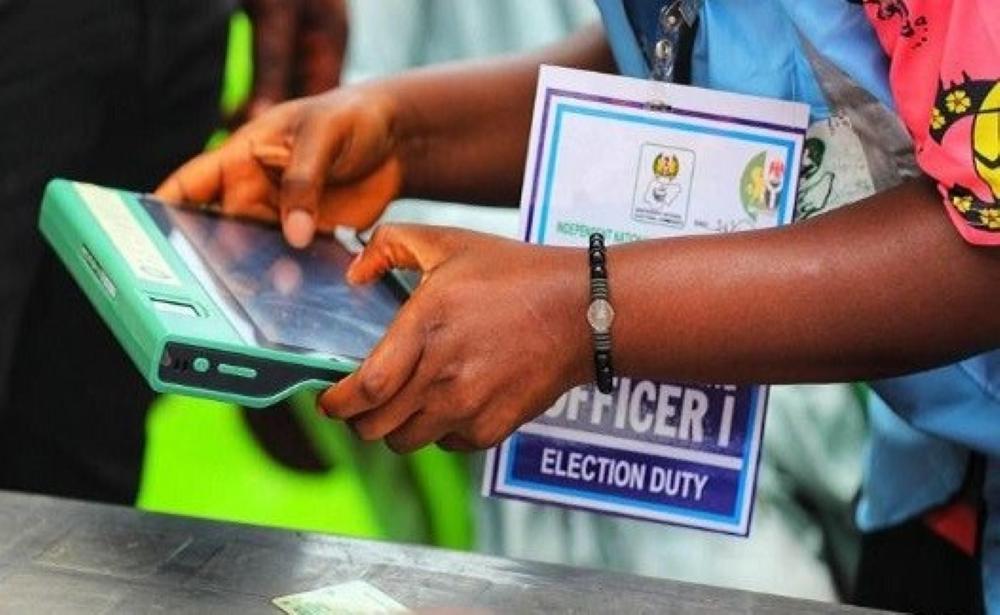

The Independent National Electoral Commission (INEC) has proposed a staggering N873.78 billion budget to conduct Nigeria’s 2027 general elections, marking a sharp increase from the N313.4 billion spent on the 2023 polls.
INEC Chairman, Professor Joash Amupitan, disclosed the figure on Thursday while defending the commission’s 2026 budget proposal before the Joint Committee of the National Assembly on Electoral Matters in Abuja.
Amupitan explained that the upward review was necessitated by funding gaps, expanded electronic transmission requirements, and increased allocations for ad hoc personnel.
He said the commission prepared the proposal in line with the provisions of the Electoral Act 2022, which mandates election planning to commence at least 360 days before voting.
“If you want to predict the future, it is necessary to create it early. Preparation for the 2027 election has already started,” Amupitan told lawmakers, adding that the legislative provision for early preparation was designed to prevent avoidable logistical and operational crises.
A breakdown of the proposed N873.78 billion shows that election operations will account for N375.75 billion; election administrative costs, N92.3 billion; election technology, N209.21 billion; and election capital costs, N154.90 billion. An additional N41.01 billion is earmarked for miscellaneous expenses.
Responding to concerns about INEC’s capacity to transmit results electronically, the chairman acknowledged that the commission does not operate its own independent network infrastructure.
“We do not even have a network of our own. Assuming we control the network system and are not dictated to by primary and secondary providers, then INEC should be held 100 per cent responsible for whatever happens. But the cost of establishing such infrastructure is enormous,” he said.
Amupitan also criticised the envelope budgeting system, arguing that it constrains the commission’s operational independence. “The envelope system is not good for the running of INEC if INEC must be truly independent,” he said, urging the National Assembly to exercise its constitutional authority to adjust the proposal where necessary.
A major highlight of the proposed budget is the significant increase in allowances for National Youth Service Corps members and other ad hoc staff engaged during elections.
Each corps member or ad hoc staff is proposed to receive N127,000 for five days of duty. The package includes N50,000 for election duty, N5,000 for training, about N9,500 for feeding, among other components.
Lawmakers underscored the importance of adequately compensating polling officials to safeguard electoral integrity.
Chairman of the House of Representatives Committee on Electoral Matters, Honourable Adebayo Balogun, stressed that the credibility of elections begins at the polling unit level.
“The pyramids of elections are the polling units and the masters of the polling units are the presiding officers,” Balogun said, warning that poorly paid officials could be susceptible to inducement.
Amupitan concurred, noting that honoraria for ad hoc personnel consume a substantial portion of election expenditure. “If they must perform their duties creditably and with integrity, we cannot lose our eyes to such demands,” he said.
On procurement plans, the INEC boss revealed that although Nigeria currently has 176,846 polling units, the commission intends to purchase approximately 130,000 new ballot boxes after an audit indicated that many existing boxes remain serviceable.
He also defended plans to redesign voting cubicles in response to reports by local and international observers on vote-buying.
According to him, the current cubicles are too small and require voters to step out to drop ballots into boxes, creating opportunities for vote confirmation and inducement.
“If you expand them to accommodate the ballot box inside, voters will not need to step out to drop their ballots. That reduces the possibility of vote confirmation and vote buying,” he explained.
Lawmakers further queried the commission on funding provisions for by-elections and off-cycle governorship elections scheduled for 2026.
They cautioned against concentrating capital expenditure in 2027 at the expense of imminent electoral obligations.
Amupitan acknowledged the strain caused by frequent by-elections, often triggered by the death of lawmakers, and said the commission must always budget for such contingencies, even while hoping they do not occur.
The proposed budget is expected to generate robust debate within the National Assembly, particularly amid concerns over rising election costs and Nigeria’s broader fiscal pressures.