

Stakeholders working to eliminate Female Genital Mutilation and Cutting (FGM/C) in Oyo State have issued a strong warning that the modest gains recorded over the years could be reversed without sustained political commitment, stronger enforcement of laws, and increased domestic investment.
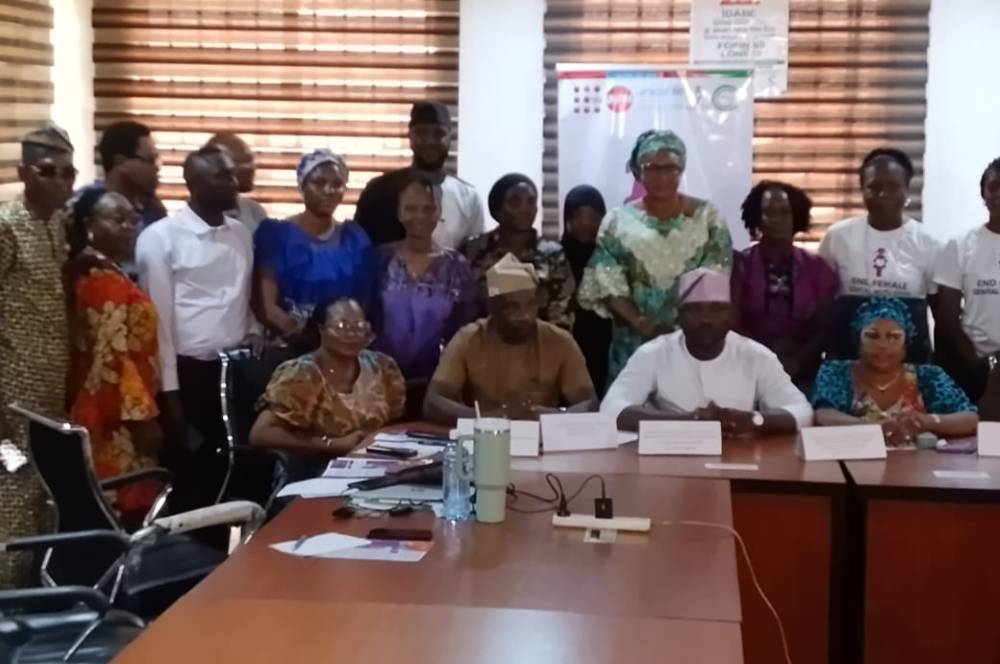
The warning was sounded on Friday in Ibadan during a media briefing to commemorate the 2026 International Day of Zero Tolerance for Female Genital Mutilation.
The event was organised by the Centre for Comprehensive Promotion of Reproductive Health (CCPRH) in collaboration with the Correspondents’ Chapel of the Nigeria Union of Journalists, with funding support from the United Nations Population Fund (UNFPA).
The briefing brought together government officials, development partners, civil society organisations and journalists. It was held under the theme, “Towards 2030: No End to FGM Without Sustained Commitment and Investment,” at the Boardroom of the Mediation Centre, Ministry of Justice, Oyo State Government Secretariat, Agodi, Ibadan.
Delivering the keynote address, the Chairman of the Oyo State House of Assembly Committee on Women Affairs and Community Development, Dr. Olufunke Comforter Olajide, described the protection of the girl child as a collective responsibility that must not be treated with levity.
Condemning FGM as a deeply harmful practice, Olajide said it carries severe health, psychological and social consequences for victims, stressing that the future of society is inseparable from the wellbeing of girls.
“The welfare, growth and development of our society rest heavily on the wellbeing of every girl child. We must nurture, protect and preserve their future,” she said.
“FGM poses immediate and long-term complications that create psychosocial, emotional and unhealthy imbalances. We must strive for a community where every girl can thrive without fear of being cut.”
She identified legislative oversight, budgetary commitment and policy continuity as critical pillars for ending the practice, urging the state to strengthen existing legal frameworks.
“We must strengthen laws such as the Violence Against Persons Prohibition Law and ensure strict enforcement. Relevant ministries and agencies must create budget lines for anti-FGM programmes, while policies must be sustained across administrations if we are to meet the 2030 target,” she added.
Also speaking, the Chairman, House Committee on Finance, Appropriation and State Economic Planning, Hon. Olasunkanmi Babalola, noted that Oyo State already has relevant laws but faces challenges with effective implementation.
“The problem is not the absence of laws but their effectiveness. We are introducing post-legislative scrutiny to review how laws perform after execution and make necessary improvements,” he said.
Earlier, in his welcome remarks, the Executive Director of CCPRH, Emeritus Professor Oladosu Ojengbede, said the global focus for 2026 underscores the urgency of consistent financing and sustained political will.
Ojengbede highlighted significant progress in reducing FGM prevalence in Nigeria, particularly in Oyo State, where prevalence has reportedly declined from 65 per cent to 18 per cent. Despite this progress, he warned that nearly one in five girls and women in the state still experiences FGM, while many more remain at risk.
He attributed the decline to years of advocacy, legislation, community engagement and survivor-led interventions, but cautioned against complacency.
“The central message of 2026 is clear: commitment must be sustained and financed. Commitment without investment is not enough,” he said.
“Sustained investment means predictable financing for prevention, protection and response; capacity building for health workers, justice actors and social service providers; community-led approaches that shift harmful norms; strong data systems; and enforcement of laws alongside survivor-centred support.”
Ojengbede called on the Oyo State Government to institutionalise funding for anti-FGM initiatives through dedicated budget lines and urged oversight bodies to ensure that policies translate into real action at the grassroots.
He also emphasised the role of the media, communities and traditional leaders in driving long-term behavioural change.
“Oyo State has demonstrated leadership in reducing FGM prevalence. The task before us now is to protect these gains and accelerate progress towards zero,” he said, adding that history would judge leaders not by declarations but by whether girls grow up free from harm.
The Executive Secretary of the Oyo State Primary Health Care Board, Dr. Olatunji Muideen Babatunde, described the fight against FGM as a collective duty that requires increased investment in prevention.
“This is a call to duty for everyone. We must invest more and ensure all stakeholders wake up to their responsibilities in protecting girls from this harmful practice,” he stated.
Similarly, the Permanent Secretary, Oyo State Ministry of Health, Dr. Akintunde Ayinde, stressed the need for accountability across all levels of healthcare delivery.
“Stakeholders must be accountable. From primary healthcare centres to secondary facilities, everyone must be involved in the fight against FGM,” he said.
Chairman of the Correspondents’ Chapel, NUJ, Oyo State Council, Mr. Yinka Adeniran, reaffirmed the media’s role in advocacy and public enlightenment against harmful traditional practices.
“The media will continue to play a frontline role in advocacy, public sensitisation and holding institutions accountable in the collective effort to end FGM and other harmful practices,” he said.
Representing the Ministry of Justice, Mrs. Olajumoke Rofiat-Yusuf highlighted persistent legal challenges faced by survivors seeking justice, despite the domestication of the Violence Against Persons Prohibition Law in the state.
“Though the VAPP Law has been domesticated in Oyo State, victims still face challenges. We must encourage people to speak up and support stakeholders in upholding justice,” she said.