
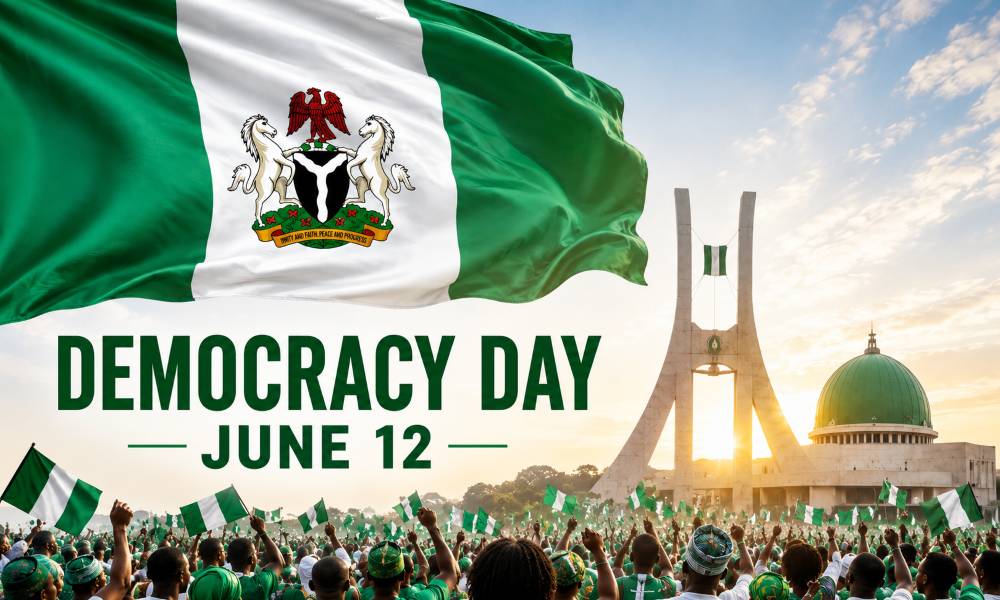

The federal government has declared Friday, June 12, 2026, a public holiday in observance of this year’s Democracy Day, reaffirming its commitment to the principles and values that underpin Nigeria’s democratic system.
The announcement was contained in a statement issued on Thursday by the Permanent Secretary of the Ministry of Interior, Magdalene Ajani, on behalf of the Minister of Interior, Olubunmi Tunji-Ojo.
According to the statement, the annual commemoration serves as a reminder of Nigeria’s democratic journey and honours the sacrifices made by citizens who fought for the restoration and sustenance of democratic governance in the country.
The minister emphasised that the current administration remains dedicated to strengthening democratic institutions through adherence to the rule of law, transparency, accountability and inclusive governance.
He noted that these values remain central to the nation’s progress and stability.
Tunji-Ojo also underscored the importance of security in sustaining democratic governance, stressing that a safe and secure environment is critical to national development and democratic consolidation.
He said the Ministry of Interior, working alongside relevant security agencies, would continue to intensify efforts aimed at safeguarding lives and property across the country.
The minister urged Nigerians to use the Democracy Day celebration as an opportunity for reflection on their civic responsibilities and contributions to nation-building.
“As we mark this historic day, every Nigerian is encouraged to remain law-abiding, uphold the institutions that sustain our democracy, and remember that the strength of any democracy lies ultimately in the character of its citizens,” the statement quoted him as saying.
Democracy Day is observed annually on June 12 to commemorate the historic 1993 presidential election, widely regarded as the freest and fairest poll in Nigeria’s history.
The election was won by Moshood Kashimawo Olawale Abiola, popularly known as MKO Abiola, but the result was annulled by the military government headed by General Ibraheem Babangida, sparking widespread protests and intensifying calls for democratic rule.
For nearly two decades after Nigeria’s return to civilian governance in 1999, Democracy Day was celebrated on May 29, the date marking the handover from military rule to an elected government.
However, in 2018, former President Muhammadu Buhari officially shifted the observance to June 12 in recognition of the significance of the 1993 election and the sacrifices of pro-democracy activists.
The significance of the date gained further prominence in 2025 when former military Head of State, Ibrahim Badamasi Babangida, publicly acknowledged that MKO Abiola won the June 12, 1993 presidential election, a position he had not previously admitted for more than three decades.
Democracy Day celebrations across Nigeria are traditionally marked by official ceremonies, public engagements and reflections on the country’s democratic achievements, challenges and the role of citizens in strengthening democratic institutions.