
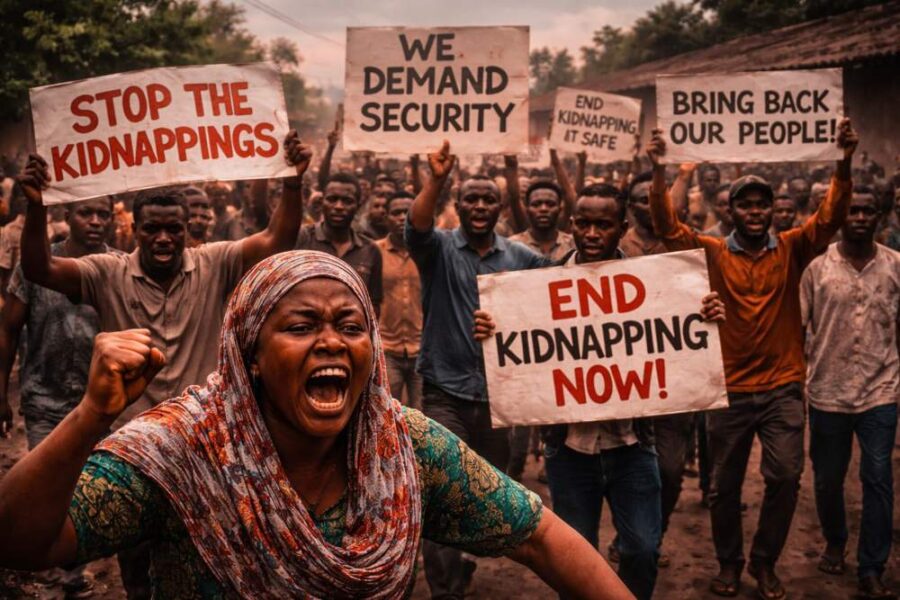

The Oodua People’s Congress (OPC) and several civil society groups have criticised President Bola Tinubu and Oyo State Governor Seyi Makinde over the continued captivity of more than 40 schoolchildren and their teachers, nearly a month after they were abducted in Oyo State.
The groups voiced their concerns on Thursday during a town hall meeting organised by News Central in Ibadan with the theme, “Oyo at a Crossroads: Security, Safety and the Future”.
Representing the Are Ona Kakanfo of Yorubaland and OPC leader, Iba Gani Adams, the organisation’s National Director of Communications, Rauf Abiola, expressed disappointment over what he described as the government’s inadequate response to the crisis.
The victims were abducted on May 15, 2026, during coordinated attacks on Baptist Nursery and Primary School, Yawota; Community Grammar School; and L.A. Primary School, Esiele, all located in Oriire Local Government Area of Oyo State.
The attacks occurred around 9:30 a.m., with the pupils and teachers taken away by their captors.
Abiola argued that both the federal and state governments have a constitutional duty to ensure the safety of citizens and should be held accountable for the prolonged captivity of the victims.
According to him, Section 14(2)(b) of the 1999 Constitution places responsibility for the protection of lives and property on government at all levels.
“The government has not done enough. It is the responsibility of the governor to deploy every available resource to resolve the situation,” he said.
He also urged Governor Makinde to collaborate with security-support groups willing to assist in rescue efforts, including the OPC.
Abiola noted that the OPC maintains coordinators across all 33 local government areas of Oyo State and has members assigned to support school security, stressing that such grassroots structures could be useful in addressing security threats.
He further called on governors in the South-West region to take urgent and coordinated action to tackle rising insecurity.
Also speaking at the event, Femi Adeyeye, a member of the Take It Back Movement Nigeria, described insecurity as a consequence of longstanding governance and policy failures.
Adeyeye argued that inadequate access to education, unemployment and the absence of social welfare programmes have contributed to the growth of criminal networks across the country.
He maintained that the responsibility for addressing insecurity rests squarely with political leaders entrusted with public power.
“Insecurity is a political issue because it stems from policy failures. The government has the responsibility and the authority to solve the problem,” he said.
Adeyeye further alleged that kidnapping had evolved into an organised economic system involving multiple actors, including kidnappers, suppliers, arms providers and negotiators.
He warned that unless the government addresses the root causes of crime and insecurity, the challenge would continue to worsen.
The President of the National Association of Seadogs in Oyo State, Bola Osodipo, also questioned the effectiveness of current anti-kidnapping efforts, describing the situation as a growing national emergency.
Osodipo said the country needed a more decisive strategy to confront kidnappers and criminal elements, adding that insecurity had become a widespread problem beyond Oyo State.
He referenced recent comments by Yoruba nation agitator, Sunday Igboho, who reportedly expressed willingness to enter forest areas in pursuit of criminal groups.
According to Osodipo, individuals and groups offering support in the fight against insecurity should be encouraged rather than discouraged.
The remarks come amid growing public concern over the fate of the abducted schoolchildren and teachers, with pressure mounting on both federal and state authorities to secure their release and strengthen security measures across vulnerable communities.