
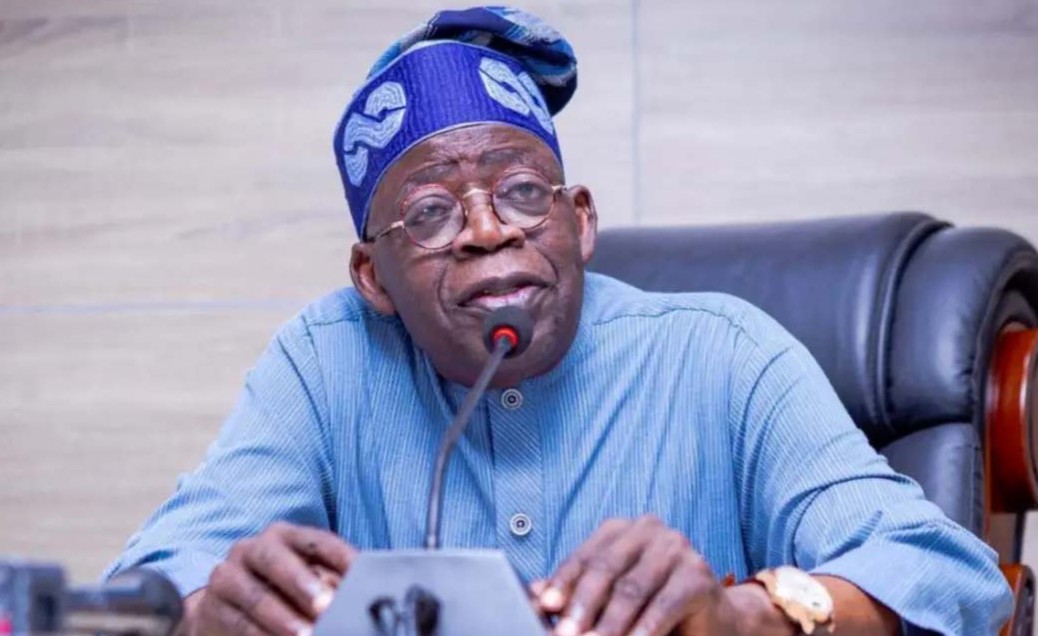

President Bola Tinubu has emerged as the presidential candidate of the All Progressives Congress (APC) for the 2027 general election after recording an overwhelming victory in the party’s nationwide direct primary election.
The president secured 10,999,162 votes to defeat his sole challenger, Stanley Osifo, who polled 16,503 votes in the exercise conducted across the country’s 8,809 wards.
The results were officially announced on Saturday during the national collation exercise held at the President Bola Ahmed Tinubu International Conference Centre in Abuja.
The APC Presidential Primary Election Committee, chaired by former Senate President Pius Anyim, supervised the collation process, which lasted for about two hours.
Declaring the result, Anyim disclosed that the party had 12,643,316 registered members, while 11,069,756 members were accredited for the primary election conducted in 774 local government areas nationwide.
“It is my pleasure to announce the results, with President Bola Ahmed Tinubu polling 10,999,162 votes and the challenger Osifo Stanley scoring 16,503 votes,” Anyim stated.
The APC adopted the direct primary model for the presidential contest, allowing all registered financial members of the party to participate in the voting process rather than relying on selected delegates.
Governors from 31 states, alongside senior party officials serving as state coordinators and collation officers, presented results from their respective states to the national committee.
Among those who presented state results were Gboyega Oyetola for Osun State, Teslim Folarin for Oyo State, Deputy Speaker of the House of Representatives Benjamin Kalu for Abia State, and Ali Pate for Bauchi State.
Tinubu swept all 36 states and the Federal Capital Territory, recording 100 per cent of votes cast in several states. Osifo, however, managed to secure votes in a few states, including Lagos, Kano, Niger, Bauchi and Abia.
The APC candidate recorded dominant figures across the six geopolitical zones.
In the South-West, he secured 814,988 votes in Lagos, 322,485 in Ogun, 181,996 in Ondo, 142,754 in Oyo, 100,888 in Osun and 85,340 in Ekiti.
In the North-West, Kaduna delivered 618,914 votes, Kano returned 500,852 votes, while Katsina produced 467,003 votes for the president.
Tinubu also maintained a strong lead in the North-Central, polling 374,787 votes in Benue, 310,990 in Kwara, and 285,436 in Nasarawa. The Federal Capital Territory contributed 36,103 votes.
The South-East and South-South equally delivered significant numbers for the president, including 582,960 votes in Imo, 407,646 in Delta, 389,197 in Akwa Ibom and 280,082 votes in Rivers State.
Osifo reportedly failed to record any vote in 21 states and secured only one vote in his home state of Edo.
At about 4:50 p.m., APC National Chairman, Prof. Nentawe Yilwatda, presented Tinubu with the party’s certificate of return and flag as the APC standard bearer for the 2027 presidential election.
President Tinubu, accompanied by First Lady Oluremi Tinubu, arrived at the collation centre to loud cheers from party supporters and leaders.
Speaking earlier, Yilwatda said the ruling party had deepened internal democracy through the transparent conduct of the direct primary election.
“We started with the primary election from the House of Assembly, the National Assembly, governorship, and we climax with that of the President,” he said.
The APC chairman noted that the live broadcast of the collation exercise on television and online platforms was aimed at demonstrating transparency and accountability.
He also acknowledged that representatives of both aspirants raised objections over some collated figures during the process, but said the issues were resolved amicably.
“There have been challenges to the results. It shows that APC is open when challenges arise, and mistakes were made. Corrections were done based on the suggestion of the two representatives of the two aspirants,” Yilwatda added.
In his remarks, Anyim defended the adoption of the direct primary model, describing it as a major step toward electoral reform and broader participation in Nigeria’s democratic process.
According to him, the system promotes transparency, inclusivity and confidence in the electoral process while reducing controversies associated with delegate-based primaries.
The event attracted top party leaders and government officials, including Vice President Kashim Shettima, Senate President Godswill Akpabio, Speaker of the House of Representatives Tajudeen Abbas, governors elected on the APC platform, federal lawmakers, diplomats and representatives of the Independent National Electoral Commission (INEC).