
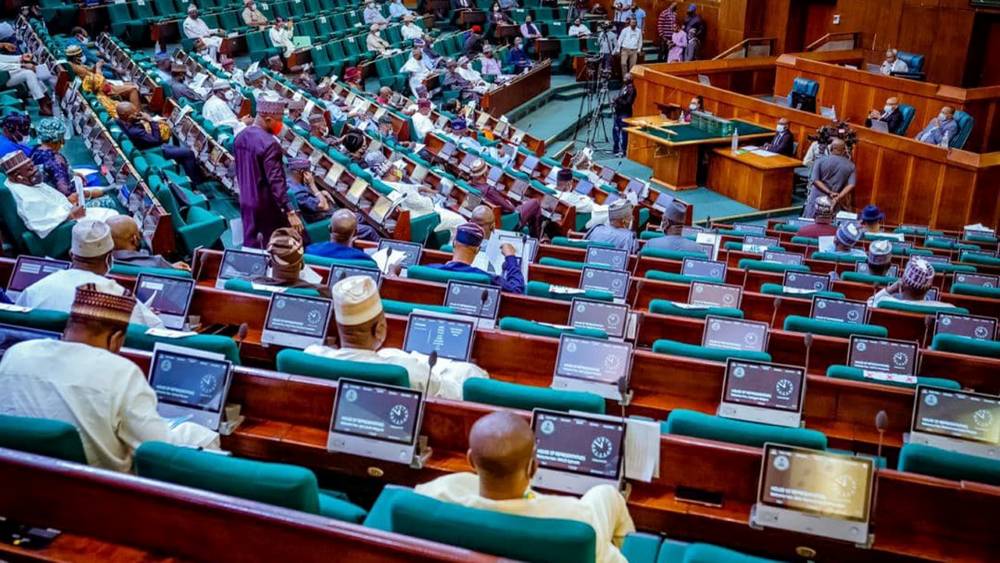

The House of Representatives descended into a heated session on Tuesday following a controversial motion seeking to rescind the chamber’s earlier passage of the Electoral Act Amendment Bill containing provisions for real-time electronic transmission of election results.
The motion was moved by the Chairman of the House Committee on Rules and Business, Hon. Francis Waive, who urged lawmakers to align with the Senate’s position on the transmission of results.
When the Speaker, Rt. Hon. Tajudeen Abbas, put the motion to a voice vote, lawmakers opposing the move appeared to outnumber supporters, as the “nays” resounded more loudly across the chamber.
However, the Speaker ruled in favour of the motion, declaring that the “ayes” had prevailed.
The ruling immediately sparked protests, with several lawmakers shouting in objection and challenging the Speaker’s decision. The tension forced Abbas to call for an executive session in a bid to restore order and deliberate further behind closed doors.
In December 2025, the House had passed the Electoral Act Amendment Bill with a provision mandating compulsory real-time electronic transmission of election results to the Independent National Electoral Commission (INEC) Result Viewing Portal (IReV).
The clause adopted by the lower chamber states that the presiding officer “shall electronically transmit the results from each polling unit to the IReV portal in real time, and such transmission shall be done after the prescribed form EC8A has been signed and stamped by the presiding officer and/or countersigned by the candidates or polling unit agents, where available at the polling unit.”
However, when the Senate passed its version of the bill, it initially rejected the real-time transmission proposal, opting for a more flexible approach.
The decision attracted widespread criticism and protests from civil society groups and opposition parties, who described the move as a setback for electoral transparency.
Last Tuesday, the Senate revisited the issue and reversed its earlier position, approving electronic transmission of election results to IReV. Nonetheless, the upper chamber introduced a caveat allowing for manual collation of results in the event of technological failure.
Following the passage of their respective versions of the bill, both chambers constituted a joint conference committee to harmonise the differences.
Opposition parties have since intensified pressure on the National Assembly to adopt the House’s original version, particularly the “real-time” transmission clause, arguing that it remains critical to strengthening electoral credibility, transparency, and public trust in Nigeria’s democratic process.
As deliberations continue, the fate of the contentious provision now rests on the harmonisation process, with political stakeholders watching closely for a final legislative position that could significantly shape the conduct of future elections.