
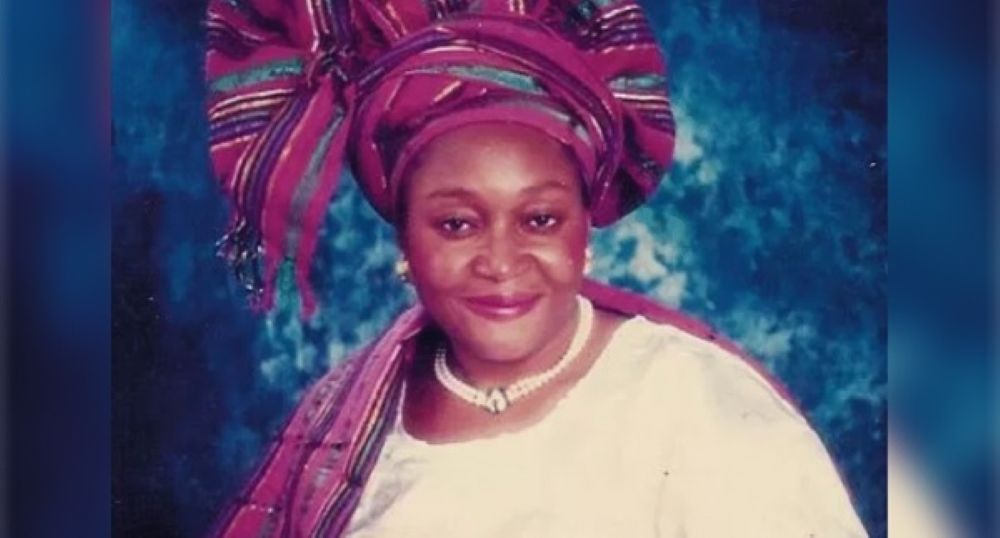

Family members, senior advocates and civil society organisations have sharply criticised the Lagos State Government following the final closure of the murder case of Kudirat Abiola by the Supreme Court of Nigeria, after it emerged that the state abandoned its appeal for nine years.
In a unanimous judgment delivered on Thursday by a five-member panel, the apex court held that the Lagos State Government failed to take any procedural steps to prosecute its appeal against the acquittal of Major Hamza Al-Mustapha (retd.), thereby effectively abandoning the case.
The ruling has reignited national outrage over the unresolved assassination of Kudirat Abiola, wife of the presumed winner of the June 12, 1993 presidential election, the late MKO Abiola.
Kudirat Abiola was assassinated in Lagos on June 4, 1996, at the height of mass protests against the annulment of the June 12 election by the regime of the late General Sani Abacha.
Her killing became one of the most defining tragedies of Nigeria’s pro-democracy struggle, symbolising the extreme repression deployed to silence dissent during military rule.
Al-Mustapha, former Chief Security Officer to Abacha, alongside Mohammed Abacha and Lateef Shofolahan, was arraigned on charges of conspiracy and murder.
On January 30, 2012, a Lagos High Court sentenced the trio to death by hanging. However, the Court of Appeal, on July 12, 2013, overturned the conviction, citing weak and unreliable evidence, and discharged and acquitted them.
Dissatisfied with the appellate judgment, the Lagos State Government approached the Supreme Court in 2014 and was granted leave to appeal out of time. A seven-man panel led by the then Acting Chief Justice of Nigeria, Justice Walter Onnoghen, ordered the state to file its notice of appeal within 30 days.
Despite the directive, the state took no further steps. When the matter resurfaced before the Supreme Court nine years later, it was revealed that the government neither filed the required processes nor appeared in court.
Delivering the lead judgment, Justice Uwani Aba-Aji described the state’s conduct as “inexcusable,” noting that Lagos had been aware of the proceedings since 2020 and was duly served hearing notices.
The court ruled that nine years was more than sufficient time to file the necessary documents and dismissed the appeal marked SC/CR/45/2014, while striking out a related appeal, SC/CR/6/2014, on the same grounds. The decision effectively ended all legal efforts to reopen the prosecution of Al-Mustapha over Kudirat Abiola’s murder.
The judgment triggered strong reactions from the Abiola family, human rights organisations and senior legal practitioners.
Reacting, Kudirat Abiola’s son, Jamiu Abiola, described the abandonment of the appeal as painful and unjustifiable, saying the prolonged delay amounted to emotional torture for the family.
“As 2026 marks 30 years since my mother was assassinated, there was absolutely no reason for this case to be abandoned,” he said, adding that those responsible would face divine justice.
Senior Advocate of Nigeria, Ebun-Olu Adegboruwa, said the Lagos State Government squandered public trust and dishonoured a case that symbolised Nigeria’s democratic struggle.
“Lagos was the centre of the pro-democracy movement, and Mrs Kudirat Abiola stood at its heart. To abandon this appeal is totally unfortunate, and history will not forgive it,” he said.
The Country Director of Amnesty International Nigeria, Isa Sanusi, described the ruling as a reflection of deep institutional failure, calling for an independent inquiry into atrocities committed during and after the June 12 struggle, as well as compensation for victims’ families.
However, some senior lawyers offered a more cautious assessment. Victor Okpara, SAN, noted that criminal prosecution depended largely on the quality of evidence, arguing that weak investigations could make further appeals futile. Olusegun Fabunmi, SAN, added that changes in government and personnel might have affected continuity, suggesting the state may have reviewed the case and found no basis to proceed.
Human rights lawyer Femi Falana, SAN, insisted that the Supreme Court decision did not extinguish the broader quest for justice. Falana recalled confessions by Sergeant Barnabas Jabilla (Rogers), a member of Abacha’s killer squad, including testimonies before the Oputa Panel, which he said were never withdrawn.
When Punch newspaper contacted the Lagos State Attorney-General and Commissioner for Justice, Lawal Pedro (SAN), he said he had just been informed of the ruling and would study the case files before making an official comment.